
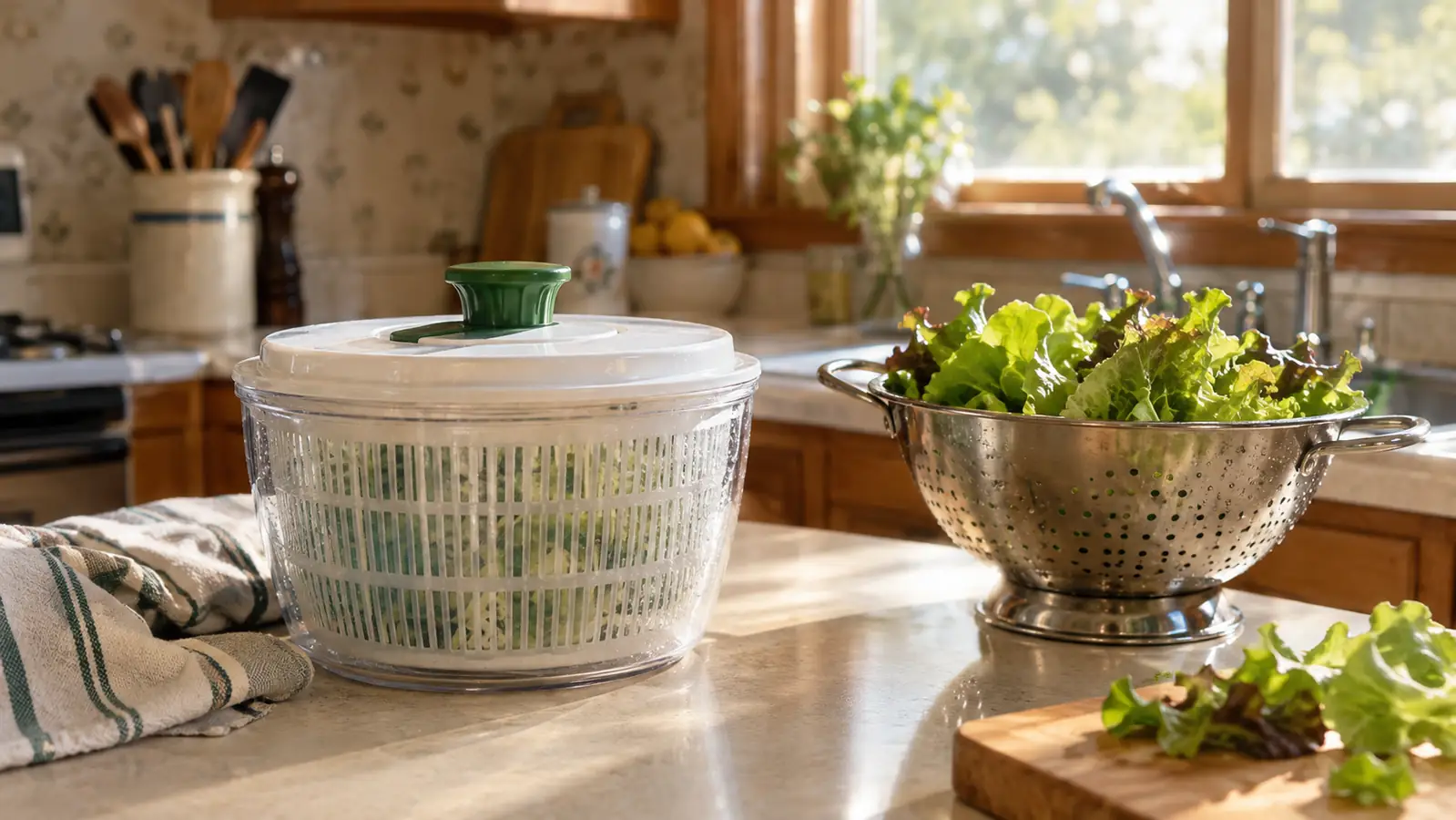
I used to toss half a head of lettuce every week. I would buy it Saturday morning, wash it Sunday, and by Tuesday the leaves were slimy at the edges and the bag smelled like a swamp. For a guy who spent years on a restaurant line, that felt like a personal failure. A kitchen that wastes food is a kitchen I do not respect.
The fix is not complicated, but it is specific. You need to wash the leaves properly, get them dry, and store them with the right amount of air. I have been doing it the same way for the past two years with an OXO salad spinner, and I can honestly say I now finish a head of lettuce instead of composting most of it.
If you have a spinner sitting in a cabinet right now, this is the article for you. You bought it, you used it once, it felt awkward, and now it collects dust. I get it. I felt the same way until I figured out the routine. The gadget was never the problem. The method was.
The Spinner That Earned a Spot on My Counter
The OXO Good Grips 6.22 Qt Salad Spinner has been my daily driver for two years. It dries a full head of romaine in one spin, folds flat for the drawer, and has survived more weeknight dinners than I can count. If you are going to do this routine, this is the tool to do it with.
Amazon Check Today's Price on Amazon →Why Lettuce Goes Bad So Fast
Lettuce is mostly water, and water is what makes it rot. The leaves are covered in tiny openings that lose moisture the moment they are cut. That is why a whole head lasts longer than a bag of pre-cut leaves. Cutting opens the cells and gives bacteria somewhere to live.
The other factor is the wetness left behind after washing. A wet leaf in a sealed bag is a greenhouse. The moisture sits against the leaf, the bag traps it, and within a day or two you have the start of that slimy film. Most people blame the lettuce. The real problem is the water you left on it.
That is the whole argument for a good spinner in one sentence. It removes the moisture that turns your lettuce to slime, and it does it faster than patting a hundred leaves dry with a towel. You can dry lettuce with towels. It takes forever, it wastes paper, and you still miss the water hiding in the folds.
Step 1: Break the Head Apart
The first mistake people make is washing the whole head in one lump. That traps grit and makes the leaves harder to dry. I break the head apart leaf by leaf, pull out anything that is brown or slimy, and give the core a quick rinse. For romaine, I snap each leaf off at the base. For iceberg, I thump the core on the counter and pull it out in one piece.
Do this over the sink and drop each leaf into the spinner basket as you go. You do not need to be precious about it. The point is to get each leaf loose so water can reach both sides. A head of lettuce has a lot of nooks, and water will not find them if the leaves are still stacked.
One more thing. Do not tear the leaves into small pieces before you wash them. Big leaves are easier to handle, they dry more evenly, and they keep better. Tear them into salad-size pieces right before you serve, not before you wash. It is a small thing, but it makes the whole process faster.
If you are washing a big batch for Sunday dinner, do it in two loads. Cramming the basket to the top means the outer leaves get clean and the inner ones do not. For my family of three on a weeknight, one head is one load, and that is exactly the size this spinner handles.
Step 2: Soak, Do Not Blast
Here is the part people get wrong. They run the leaves under a fast stream of water, which beats the grit deeper into the folds. The better way is to fill the spinner bowl with cold water, drop in the leaves, and swish them around with your hand. Let them sit for a minute or two. Dirt settles to the bottom, and the leaves come out clean without getting bruised.
I learned this on the line. A quick soak does more than a hard rinse, and it uses less water. After the soak, lift the basket out and dump the dirty water, then give the bowl a quick rinse. You will be surprised how much grit sits at the bottom that you never saw in the leaves.
If you are washing something delicate like butter lettuce or a bag of baby spinach, skip the aggressive swishing. Fill the bowl with cold water, drop in the leaves, and let them sit for a minute. Lift them out gently. Delicate greens bruise easily, and a bruised leaf goes brown in a hurry.
Step 3: Spin Twice
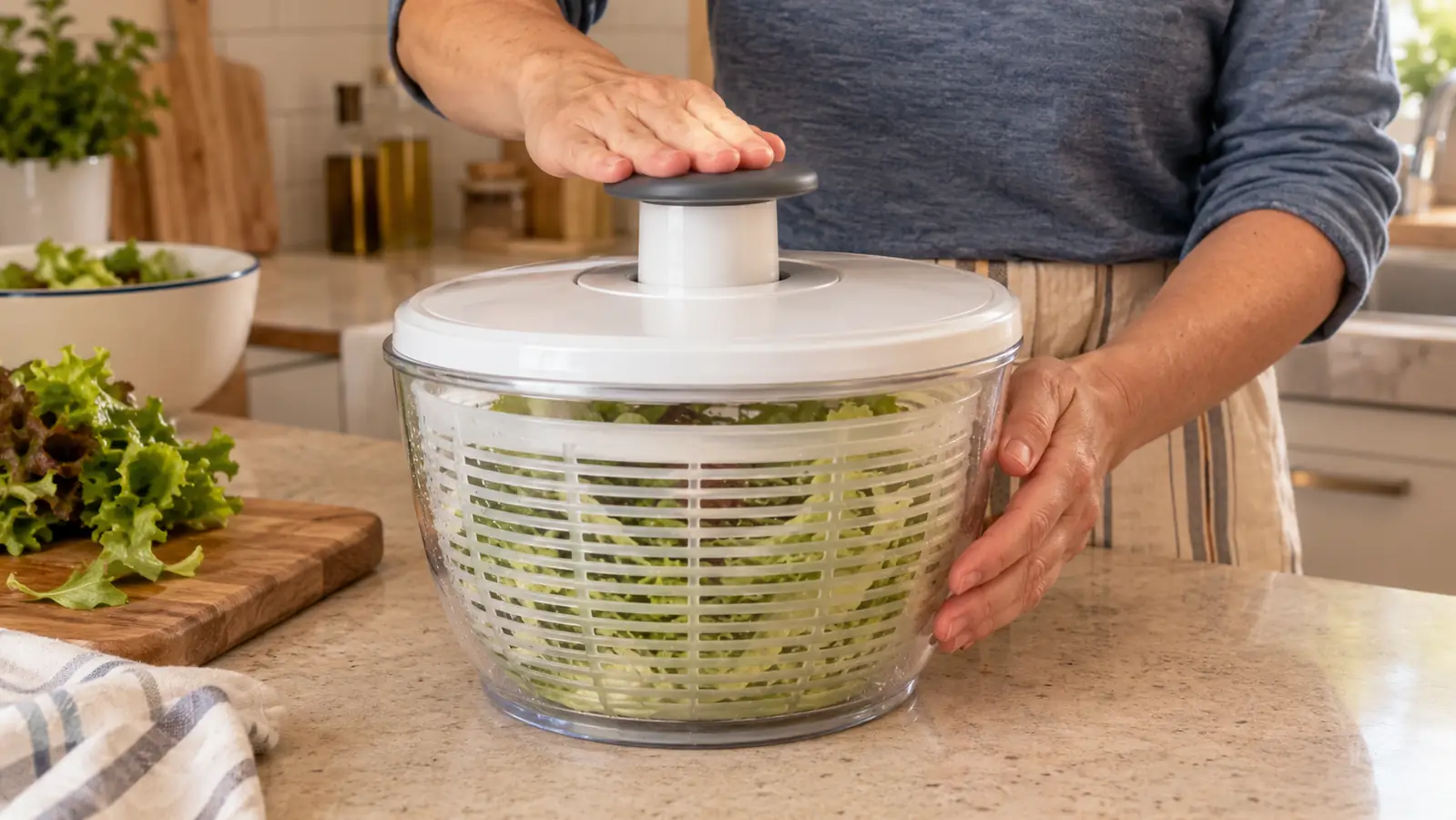
This is where the OXO earns its keep. The spinner has a pump handle on top, and it takes about fifteen pumps to get the leaves mostly dry. Pull the basket out, dump the water that collected in the bowl, put the basket back in, and give it another ten or fifteen pumps. The second spin is the one that matters. It gets the last clinging drops off the leaves.
I know that sounds fussy, but water is the enemy of fresh lettuce. Leaves that go into storage wet turn slimy in about two days. Leaves that go in dry will hold for a week. The difference between one spin and two spins is the difference between Tuesday salad and Saturday salad.
One note from experience: do not overload the basket for the spin. If the leaves are packed in so tight that the basket barely turns, they will not dry evenly. Do a smaller batch and let the basket move freely. It takes an extra minute and saves you a lot of sad lettuce.
How do you know when the leaves are dry enough? Grab a leaf and run a finger across it. If your finger comes away wet, give it another spin. If it comes away dry, you are done. That is the test I use every time, and it takes two seconds.
Step 4: Store in a Towel, Not the Basket
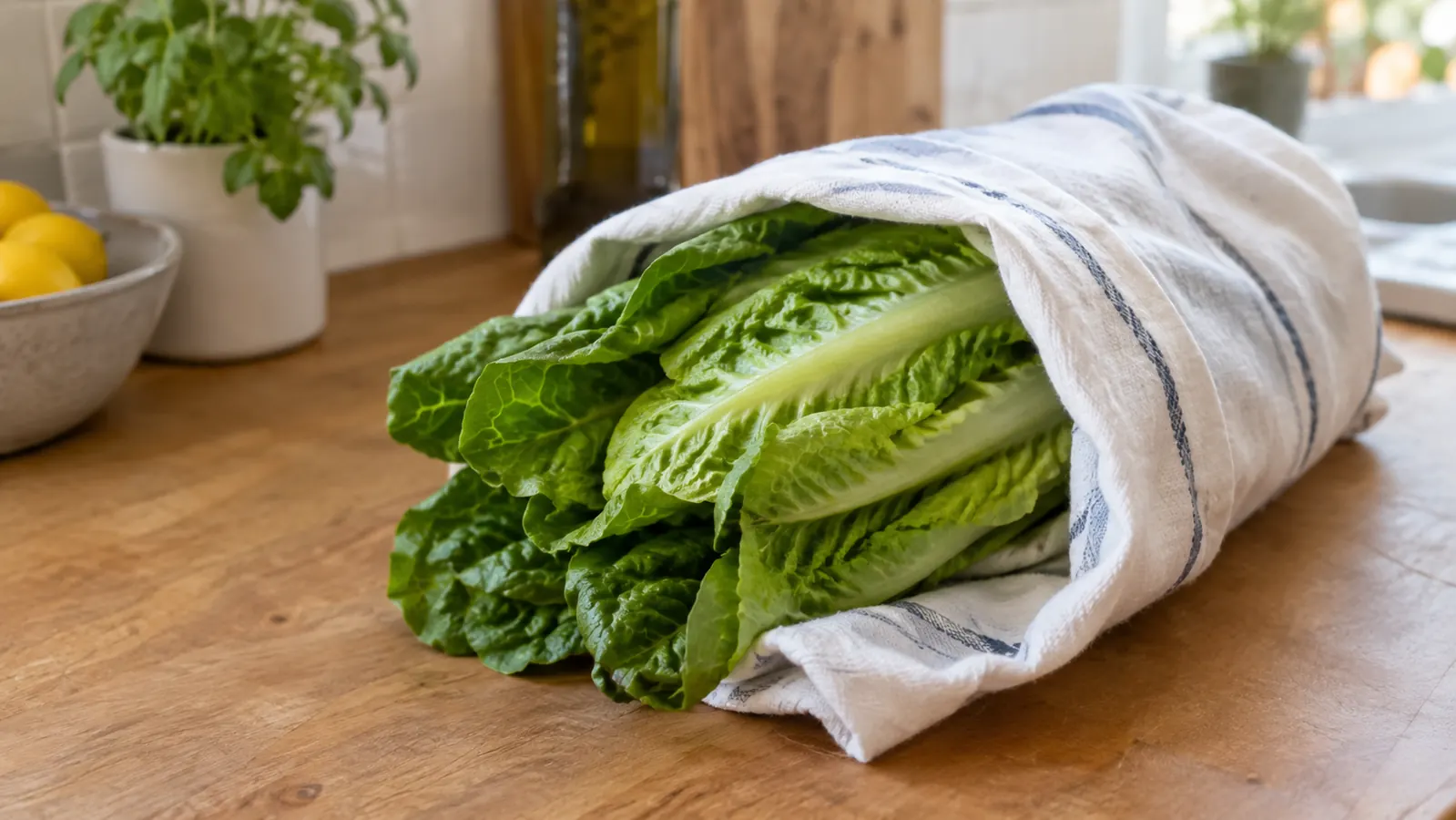
This is the step almost nobody does, and it is the one that makes the biggest difference. Do not store the lettuce in the spinner basket. It traps moisture. Instead, line the basket with a clean kitchen towel or paper towels, pile in the dry leaves, and roll the towel up around them. Then put the whole bundle in a zip bag and leave the bag slightly open, or poke a few holes in it.
The towel does two jobs. It catches any moisture that is still on the leaves, and it keeps the leaves from getting crushed against the plastic. I keep the towel loose, not wrapped tight. Lettuce wants a little air, and it does not want to be squeezed.
I store mine in the crisper drawer, laid flat. It keeps for six to seven days this way. On day five, the outer leaves are a little tired, but the inner ones are still crisp. That is a huge upgrade from the two-day shelf life I used to get.
I have tried a few storage methods over the years. The produce bags with the little holes work okay. The dry-towel roll works better. What does not work is sealing the leaves in an airtight container with no towel at all. That is the fastest way to a wet, sad bag of greens.
Step 5: Revive Before You Serve
If the lettuce has been in the fridge for a few days and the edges look a little soft, there is a simple fix. Drop the leaves in a bowl of ice water for ten minutes. They will crisp right back up. This is the same trick we used on the line to bring wilted greens back to life before service.
Then give them a quick spin in the spinner, just enough to take off the chill and the excess water, and they are ready for the bowl. This works for romaine, green leaf, and even spinach. It will not fix a leaf that is already slimy, which is why the storage step matters, but it will rescue a leaf that is just tired.
I do this most nights in the summer, when the fridge and the heat are fighting each other. Ten minutes in cold water and a quick spin, and the salad tastes like it came out of the garden instead of out of a bag.
One warning about the ice bath. Do not leave the leaves in there for more than fifteen minutes. After that, they start to take on water and get limp in a different way. Ten minutes is the sweet spot. Set a timer if you need to, and pull them out when it goes off.
What Else Helps
A few things make the whole routine easier. First, wash lettuce the day you bring it home, not the day you need it. It keeps longer if it is clean and dry before it goes in the fridge. Second, keep the spinner on the counter where you can see it. If it is buried in a cabinet, you will not use it. Third, if you buy the big bagged salads, give those a quick spin too. They are already washed, but they are usually wet when you open them, and that wetness is why they turn fast. Ten seconds in the spinner fixes that.
I keep mine on the counter between the stove and the sink. It is the gadget I reach for more than any other, and it has earned that spot. When my wife Denise wants a quick side salad on a weeknight, she does not ask where the spinner is. It is right there, and that is exactly the point.
One more habit that helps. When you buy lettuce, check it at the store. Look for heads that feel heavy for their size and have crisp outer leaves. A tired head at the store is a slimy head in your fridge three days later. You cannot fix a bad head with a good spinner, so start with good lettuce.
Leaves that go into storage dry will hold for a week. Leaves that go in wet turn slimy in about two days. The second spin is the one that matters.
The Short Version
I will wrap this up the way I would if you were standing in my kitchen. Break the leaves apart, soak them in cold water, spin them twice, roll them in a towel, and store them in a slightly open bag in the crisper. Ten minutes of work on Sunday buys you salad all week.
That routine sounds like a lot the first time you read it, but it becomes automatic after a week. I do not think about it anymore. I just do it. And the payoff, a fridge full of crisp lettuce instead of a bag of slime, is worth every second. If you give it one honest try, I think you will feel the same way.
Wash Once, Eat All Week
If you are tired of throwing away half the lettuce you buy, the OXO salad spinner is the single most useful change I have made in my kitchen. It washes, dries, and helps you store a full head in about ten minutes. The routine works, and the spinner makes it painless.
Amazon Check Today's Price on Amazon →