

I've been cooking dinner for my family most nights for over twenty years. I spent a decade on the line in a busy kitchen, and I've owned more thermometers than I care to count. Some of them lived in a drawer for months before I threw them out. So when I say the TempPro TempSwift is the one I reach for every single night, I mean it.
What sold me wasn't the 1 second claim, though that's real. It was that this thing finally made sense in my kitchen. I have about two feet of clear counter space next to the stove, and I don't want a gadget that takes up room or needs a separate base. The TempSwift is just a thin wand with a display, and that's exactly what I wanted.
I've had instant read thermometers before, but most of them were either too slow, too flimsy, or too complicated. The TempSwift is the first one that felt like it was designed for a home kitchen, not for a commercial one. That's a big deal when you're trying to get dinner on the table on a Tuesday night.
The Quick Verdict
Fast, accurate, and simple to clean. The TempPro TempSwift earned its spot in my kitchen and it's the one I'd buy again.
Amazon Check Today's Price →The Thermometer I Reach For Every Night
The TempPro TempSwift is fast, accurate, and takes up almost no room. See today's price on Amazon.
Amazon Check Today's Price on Amazon →How I've Used It
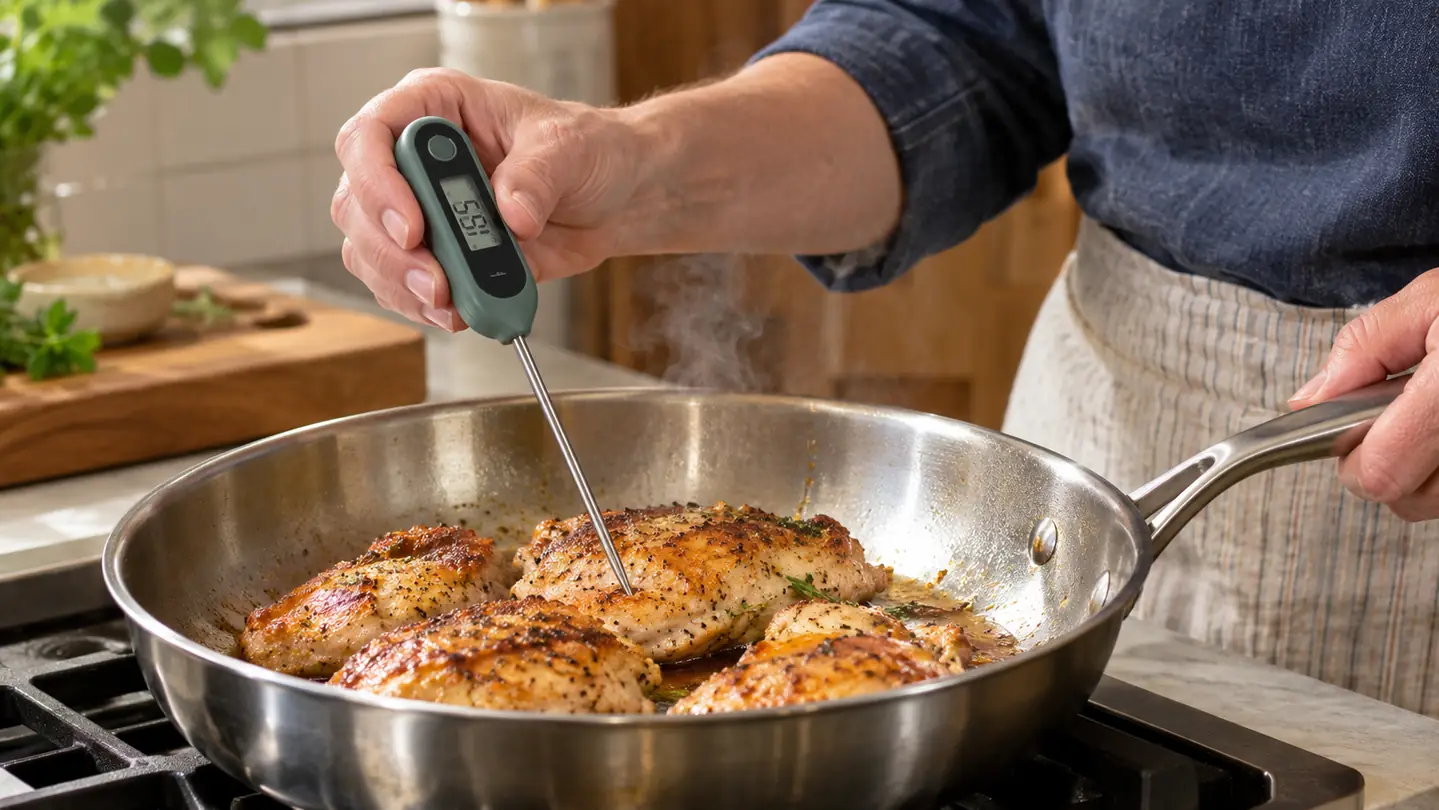
For the last six months, I've used the TempSwift on nearly every weeknight dinner. That means chicken breasts on the cast iron, pork chops on the grill pan, salmon fillets in the oven, and the occasional steak on the weekends. I set it on the counter by the stove, grab it when I need it, and put it back. It never gets in the way.
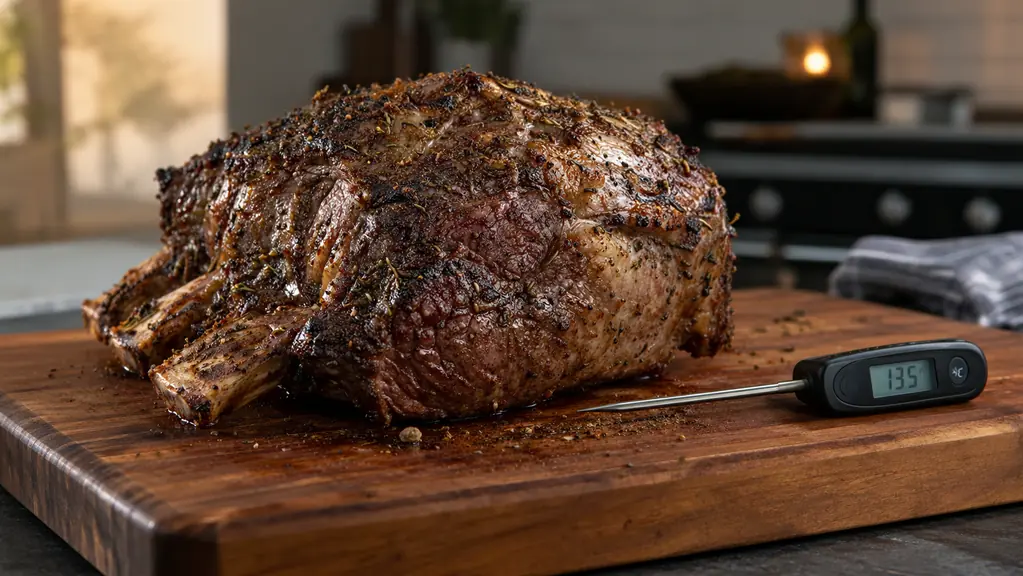
The big test was a Sunday rib roast for eight people. I used to poke at meat with my finger and hope. With the TempSwift, I hit 128 degrees at the center, pulled it out, let it rest, and it came up to 135. That's the carryover you want. It came out medium rare edge to edge, and nobody at the table had to saw through a well done end piece.
The 1 second read is not a marketing number. I've used it on thin chicken cutlets and thick pork shoulders. You stick the probe in and the number settles almost instantly. There's no counting to five while the reading climbs. That speed matters when you're juggling three things on the stove and a hungry teenager is asking when dinner's ready.
One thing that surprised me is how often I reach for it when I'm not cooking meat. I use it to check the temperature of reheated leftovers, to make sure a batch of soup is hot enough, and even to check the water for the tea I make after dinner. It's become the first thing I grab when I'm not sure about any temperature in the kitchen.
I've also used it to check the temperature of a whole chicken. I've never been good at roasting a whole bird, but with the TempSwift I can probe the thigh and the breast without any guesswork. The numbers tell me exactly when to pull it out. It's turned my roast chicken from a crapshoot into a reliable weeknight option.
Why a Fast Read Actually Matters
The reason a fast read matters isn't about saving two seconds. It's about what those two seconds do to your cooking. A slow thermometer makes you wait, and waiting makes you guess. You pull the chicken off too early or you leave it on too long while you wait for the number to settle. A thermometer that answers right away lets you trust the number instead of your instincts.
It also means you can check multiple spots. With a slow thermometer, I'd take one reading and call it good. With the TempSwift, I'll check three or four places on a thick roast in the time it used to take to get one reading. That's how you catch a cold spot or a hot spot before it becomes a dry piece of meat.
I've also learned that the speed changes how you plan. I can temp the chicken, decide it needs three more minutes, and go set the table. I'm not standing there holding a probe and watching a number climb. It gives you your time back.
There's also a safety angle. When I'm cooking chicken, I don't want to guess. I want to know it's hit 165 degrees. The TempSwift gives me that number without a second thought. That peace of mind is worth more than any fancy feature.
There's also the carryover cooking thing. When you pull a roast at 128, it's going to keep cooking to 135. If you pull at 135, you might end up at 145 and overdone. The speed of the TempSwift lets you catch the right pull temp. That's the difference between a perfect roast and a dry one.
The Build and the Cleaning
The TempSwift feels like it was made to be used, not admired. The probe is thin enough to slide into a chicken breast without tearing it apart, but it's still sturdy. I've dropped it on the floor twice and it's fine. The display is bright enough to read even when I'm working by the light of the hood fan, and the auto off saves the battery when I forget to turn it off.
Cleaning is where most thermometers die in my house. The ones with separate probes and cords are a pain to wash, and the ones with a display right on the probe are tough to dry without getting water in the electronics. The TempSwift is one piece, so I wipe the probe with a damp cloth and dry it. It takes ten seconds, and there's no fiddly battery cover to fight with.
Battery life has been genuinely good. I've replaced the battery once in six months, and that's with daily use. The auto shutoff helps, but I'm also not the kind of person who turns things off. It's a small thing, but it means I don't have to think about it.
I've also noticed that the hinge on the probe is solid. It folds flat for storage, which is nice because I can keep it in a drawer without worrying about the probe getting bent. It's a small detail, but it tells you the company thought about how people actually use the thing.
I've also left it on the counter by accident a few times, and the auto off kicks in after about a minute. That's saved the battery more than once. It's a small thing, but it means I don't have to babysit the thermometer.
What It Won't Do
No gadget is perfect, and the TempSwift has its limits. It's not a leave in thermometer, so you can't set it and walk away while a roast cooks. You have to be there to take the reading. For a weeknight cook who's at the stove anyway, that's not a problem. For someone who wants to monitor a brisket from the couch, it's the wrong tool.
It also doesn't connect to your phone. There's no app, no Bluetooth, no graph of your cook. I know some people love that stuff, but I don't need a graph to tell me the chicken is done. A simple number on a screen does the job, and it does it without another app to update.
The probe is not meant for deep frying or for a blazing hot grill grate. The instructions say it's for cooking, not for leaving in the oil or on the fire. I use it for pan cooking, oven cooking, and grilling with the lid down, and it's been fine. Just don't treat it like a probe that's meant to stay in the meat for hours.
If I had one wish, it would be a slightly longer probe for reaching into big cuts of meat without getting my hand too close to the heat. The probe is long enough for most things, but when I'm checking a deep roast, I sometimes wish it were an inch longer. That's a minor quibble, not a deal breaker.
I also wish the backlight stayed on a little longer. It's bright when you first press it, but it fades after a few seconds. For most uses that's fine, but if you're checking a dark oven with the door open, you might need to press it again.
Why I Trust This One
After six months, I've come to trust this thermometer the way I trust my own hands. It's not just the speed. It's the consistency. Every time I check a chicken breast, I get the same reading within a degree or two. That reliability is what turns a gadget into a tool you reach for without thinking.
I've also compared it to a couple of other thermometers I own. The TempSwift reads just as accurately as the one that cost three times as much, and it does it faster. I don't have a lab to test it, but I've used it side by side on the same piece of meat, and they agree. That's good enough for me.
The brand isn't one I'd heard of before, but that doesn't bother me. What matters is that it works, it holds up, and it's simple. I've had expensive thermometers die after a few months. This one is still going strong after six. That's the kind of proof I trust.
I've also noticed that the readings are consistent across different pieces of the same meat. If I check a thick pork chop in two spots, I get the same number. That tells me the probe is doing its job. I've had cheap thermometers that gave me a different reading every time you moved them an inch.
What I Liked
- Reads in about a second, which really matters when you're multitasking
- Thin probe goes into thin cuts without tearing
- Easy to clean, one piece design
- Bright display that's easy to read
- Long battery life with auto off
Where It Falls Short
- Not a leave in thermometer, so you have to be at the stove
- No Bluetooth or app, which some cooks will miss
- Not for deep frying or leaving in a hot grill
The 1 second read is not a marketing number. I've used it on thin chicken cutlets and thick pork shoulders. You stick the probe in and the number settles almost instantly.
Who This Is For
If you cook dinner most nights and you're tired of guessing, the TempSwift is for you. It's for the person who has two feet of counter space and doesn't want a gadget that takes up a drawer. It's for the cook who wants a fast, accurate read without a learning curve. You don't need an app to figure this out. You press the button, stick it in, and read the number.
It's also for the person who cooks a variety of things. I do chicken, pork, fish, steak, and the occasional roast. The TempSwift handles all of them without changing any settings. It reads from about 0 to 500 degrees, which covers everything I cook. It's one tool that does the job of three.
If you cook for a family and you're tired of dry chicken or undercooked pork, this is the tool that fixes that. It takes the guesswork out of the most important part of cooking. You'll still need to know how to season and sear, but the thermometer handles the part that's easiest to get wrong.
Who Should Skip It
If you only cook once a week and you're fine with the old poke and guess method, you don't need this. Save your money. If you want a thermometer that stays in the meat and alerts you from the other room, this isn't it. You want a leave in model with a probe and a base.
And if you need a thermometer for deep frying, where you're checking oil temperature, look for a dedicated fry thermometer. The TempSwift is a great instant read, but it's not built to sit in hot oil. Get the right tool for that job.
If you already have a reliable instant read thermometer that you're happy with, there's no reason to switch. The TempSwift isn't magic. It's just a really good version of a simple tool. Upgrade only if your current one is slow, hard to clean, or unreliable.
Still the One I Grab
After six months of weeknight dinners, the TempPro TempSwift is still the first thermometer I reach for. Check today's price on Amazon.
Amazon Check Today's Price on Amazon →