
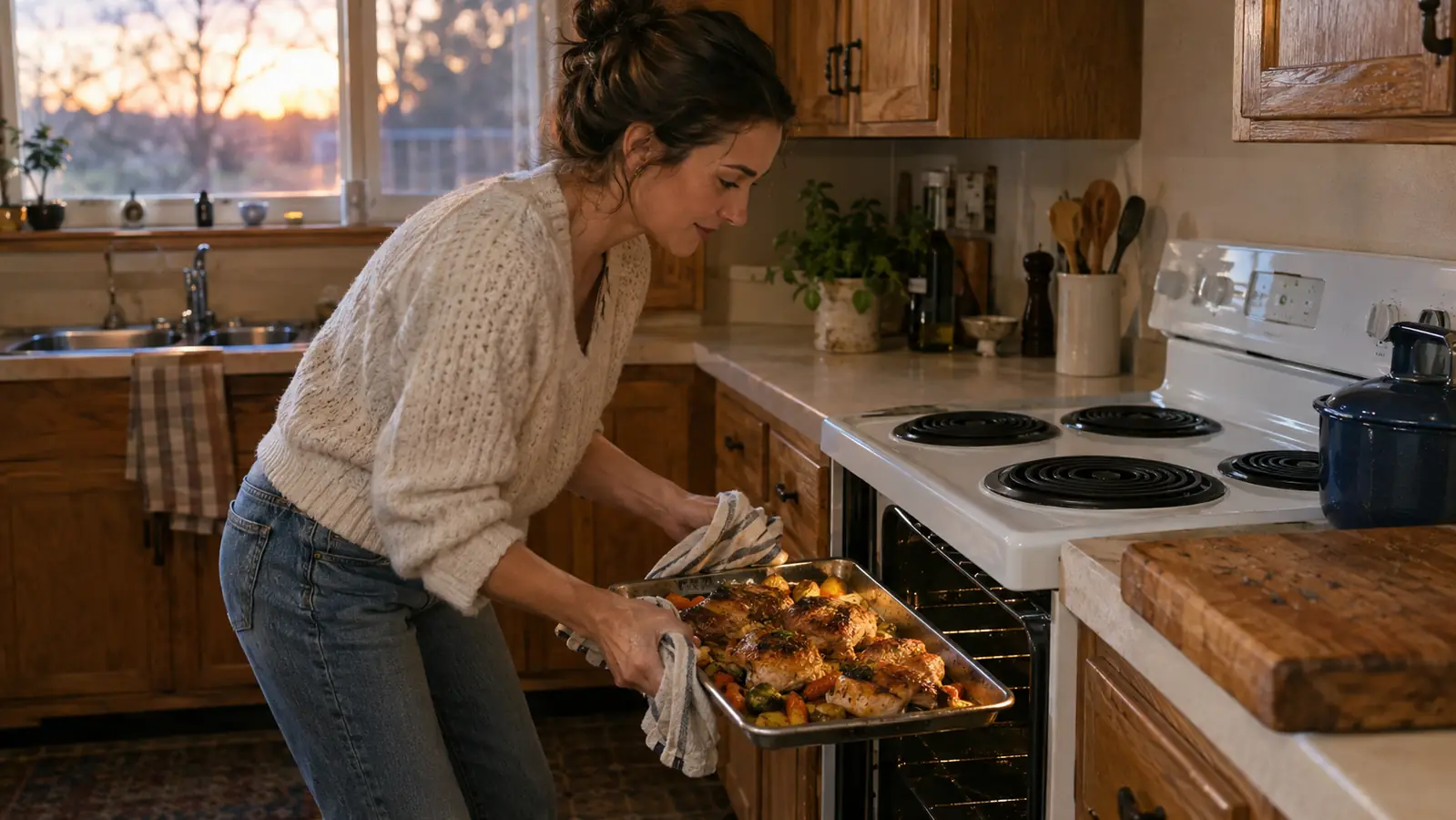
I spent years working over a hot line in restaurant kitchens, and I can honestly say we never once sent out a dry piece of chicken. Then I got home, fired up my own oven, and fed my family meal after meal of chalky, overcooked breasts. Denise was too polite to complain. My teenage son just ate them without comment. That silence made it worse.
The problem wasn't that I didn't know how to cook. I could break down a whole bird in my sleep. The problem was that I was cooking like a home cook, by the timer on the oven and by poking the meat and hoping. In the restaurant I never guessed. I had an instant-read thermometer on my apron and used it on every protein. At home I decided I was too good for the tool I'd relied on for a decade.
So I kept guessing. I'd set the timer, open the oven door every few minutes, peek, poke, and close it again. Every time that door opened, heat poured out and the cook time drifted, so I'd blast the bird to be safe. Dry again. The fix was simple: I finally bought a TempPro TempSwift.
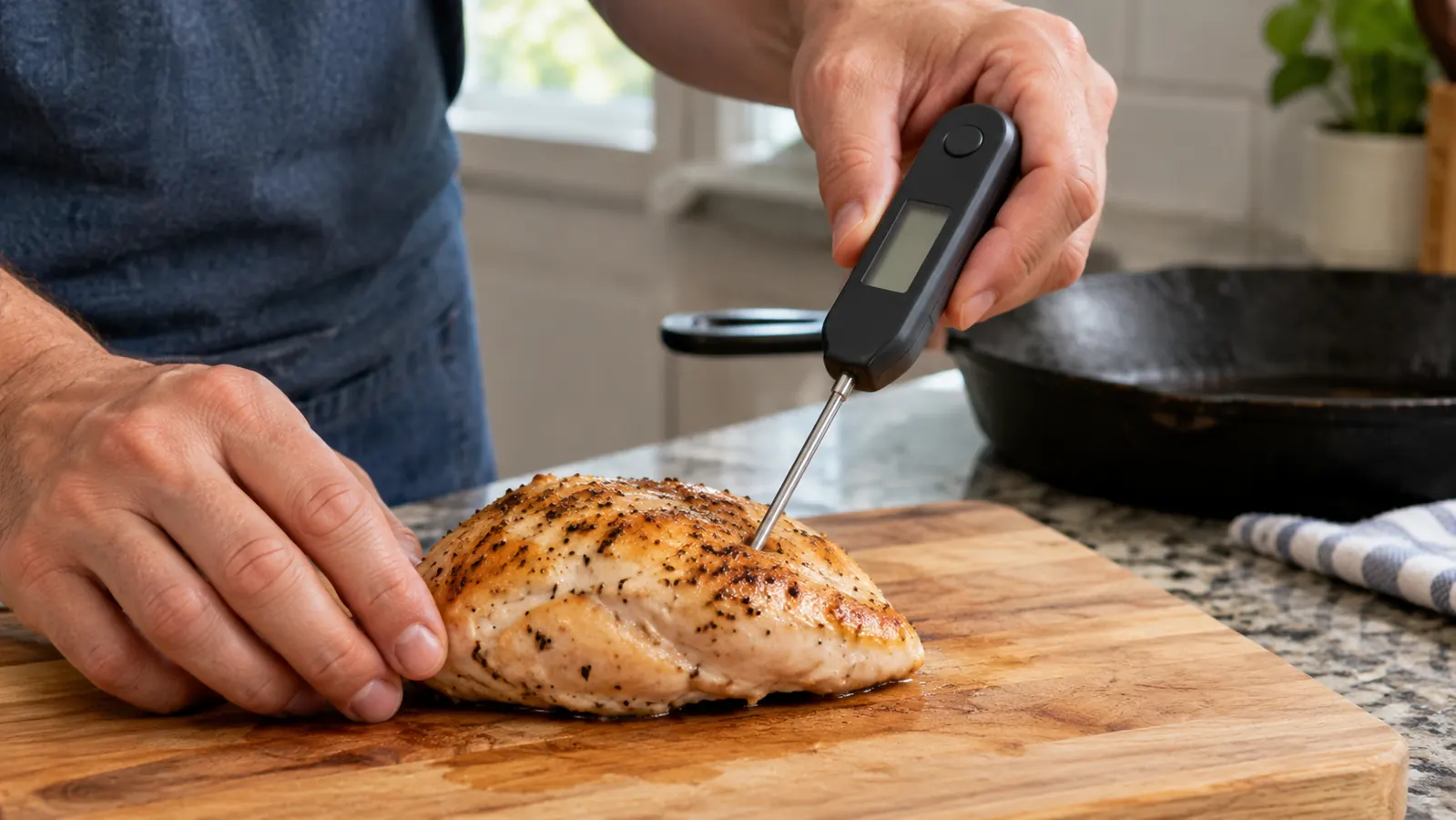
It's a digital instant-read thermometer, a slim probe with a small display, and it does one job: it tells you the temperature of the meat in about a second. That speed matters more than it sounds like. Chicken does not keep cooking while you wait for a number to settle. You get the temp, you make the call, and you pull the pan. The TempPro has been around long enough that I trusted the name, and the reading has been consistent every time I have used it.
That first Thursday I made my usual boneless chicken breasts, except I probed them instead of poking them. At 158 degrees I pulled them from the oven and let them rest on the cutting board for five minutes. They came out juicy. Not a little better. A different food entirely. My son asked why the chicken was so much better, and Denise gave me a look that said she had been waiting years for me to figure this out.
The whole thing cost less than a bag of groceries and took up none of my counter space, which is the real currency in this kitchen. We live in a 1990s ranch with a mid-size kitchen and a small pantry, and I have to be picky about what earns a home here. I keep the TempPro in a drawer with the tongs, and I have used it on every weeknight dinner since.
I pulled those breasts at 158 degrees, let them rest for five minutes, and my son asked why the chicken was so much better.
The one thermometer I actually reach for every week
After months of dry chicken dinners, a fast, accurate instant-read changed my weeknights. It lives in my drawer with the tongs and it gets used every single week.
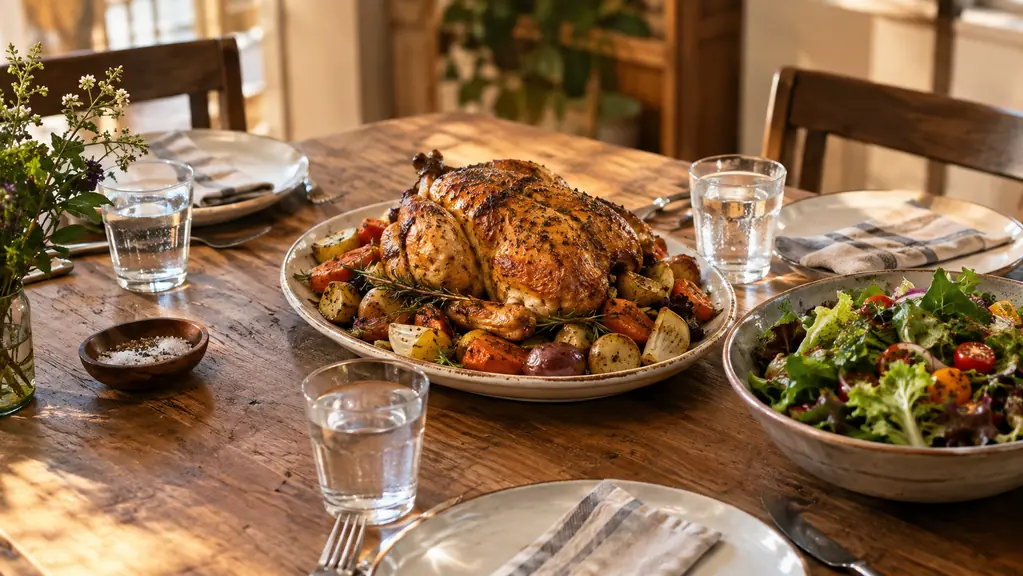
Amazon Check Today's Price on Amazon →The chicken was just the start. Sundays are bigger, Denise's parents and my brother's family, so I cook for eight or nine most weekends. A thermometer that answers in a second changed those meals too. I stopped opening the oven to check the turkey and started probing it through the gap in the door. The oven held its heat, the bird cooked on schedule, and I finally stopped hovering. The same trick worked for a pork roast and for a big batch of sausages on the stove.
I'll be straight with you about the limits. The TempPro TempSwift is not a leave-in thermometer. You do not put it in the bird and walk away. It is an instant-read, so you probe, read, and pull it out. For a pork shoulder that goes six hours in a slow cooker, I still use a cheap leave-in probe. But for anything that cooks in under an hour, chicken, fish, pork chops, burgers, this is the tool I reach for first.
The other thing nobody tells you is that a thermometer does not fix dry meat by itself. It fixes it if you respect the rest. I pull chicken around 158 or 160 and let it rest, and it climbs to a safe 165 on the board. If you pull it at 165 and serve it right away, you have missed the point. The thermometer tells you when to stop cooking. The rest finishes the job.
For a guy who spent a decade on the line, it took an embarrassingly long time to relearn that lesson at home. The timer on the oven is for baking. It is not a reliable way to cook meat. The only number that matters is the one inside the meat, and there is no way to know it without asking.
I have also gotten faster at everything around it. I probe the thickest part of the breast, the middle of a pork chop, the center of a burger patty. It takes two seconds and removes the guesswork. I still make mistakes, but they are seasoning mistakes, not overcooked mistakes, and those are easier to forgive.
What I'd Tell You If We Were Sitting at My Kitchen Table
If we were sitting at my kitchen table, I would tell you this. You do not need a smart thermometer with an app and a subscription and a charging dock taking up counter space. You need a fast, accurate instant-read thermometer and the discipline to use it every single time. Probe the thickest part of the meat, pull it a few degrees early, rest it, and serve. That is the whole trick. The TempPro TempSwift does the one job I need, it does it in about a second, and it has been in my drawer for months without a single complaint. If you cook chicken more than once a week and you are tired of dry dinners, that is where I would start.
Done guessing. Start probing.
A fast, accurate instant-read thermometer was the cheapest fix for my dry chicken problem. The TempPro TempSwift lives in my drawer and gets used every week.
Amazon Check Today's Price on Amazon →