
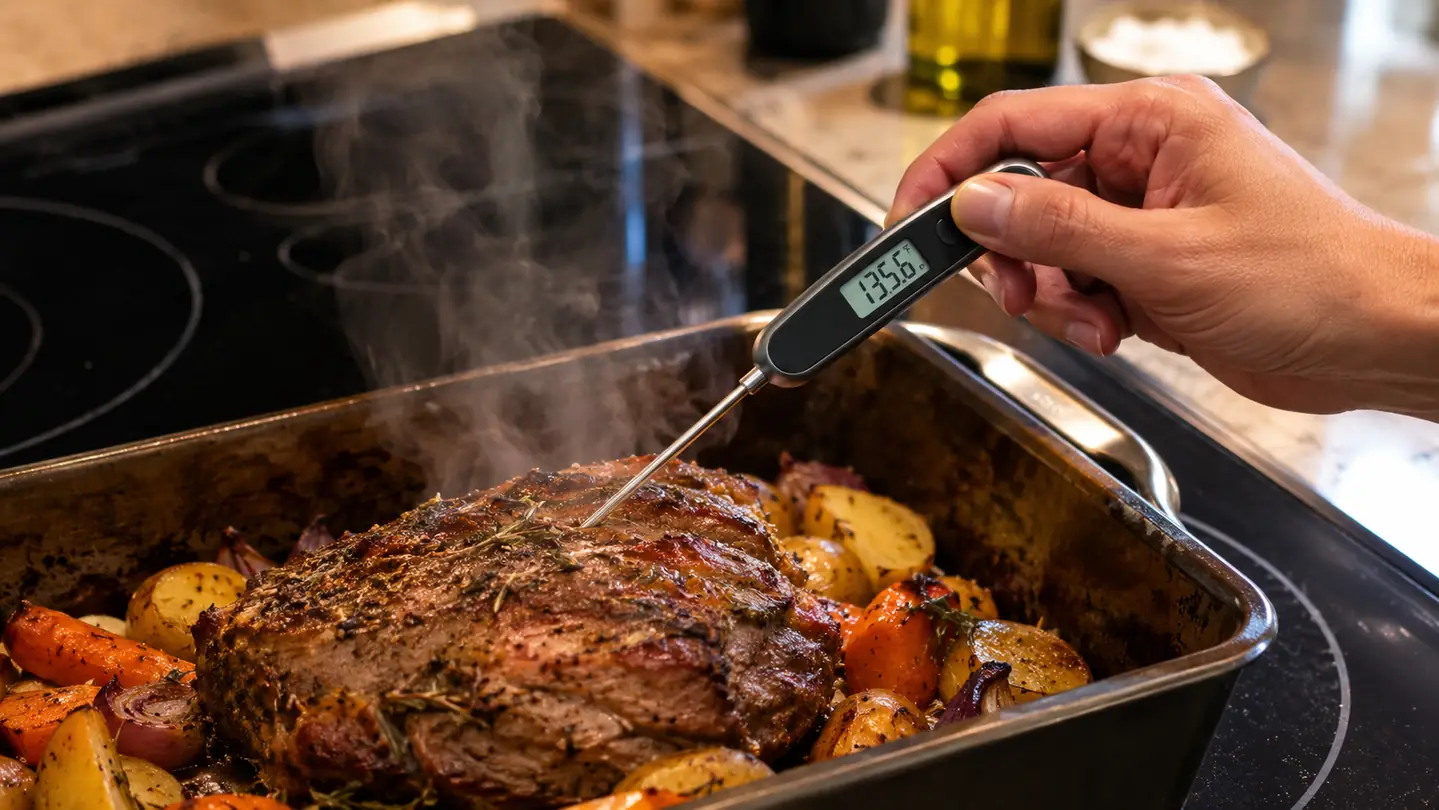
I have a drawer in my kitchen that is a graveyard of gadgets I bought because the idea of them was better than the reality. A spiralizer that only works on zucchini that are exactly the right diameter. A garlic press that I cleaned once and never used again. So when I tell you the TempPro TempSwift has lived on my counter, not in that drawer, for six months, I mean it as a specific kind of compliment. I am Marcus Bell, I cook dinner for three most weeknights in Hammond, Louisiana, and I have exactly one square foot of usable counter space next to my electric range. Every gadget I own has to earn that square foot.
The TempSwift is a 1-second digital meat thermometer, and the product page makes a lot of promises about speed and accuracy. I did not care about speed when I bought it. I cared about whether it would stop me from cutting into a chicken breast to check if it was done, which is a habit I picked up in a restaurant kitchen and have never been able to break at home. Six months later, the honest answer is that it does stop me, most of the time, and it has also taught me a few things about my own oven that I did not expect.
The Quick Verdict
The TempPro TempSwift is the rare instant-read thermometer that earns its counter space. It reads fast, it reads consistently, and it has survived six months of daily use in my kitchen. It is not perfect: the backlight is dim, the battery door is fiddly, and the probe is long enough that it does not fit in my utensil drawer. But for the home cook who is tired of overcooked chicken and undercooked pork, it is the best value I have tested.
Amazon Check Today's Price →Stop Guessing. Start Reading 1-Second Temps.
The TempPro TempSwift gives you a reliable reading in about a second, which means you can check a steak, a chicken breast, or a pork chop without holding the oven door open and losing heat. It has earned a permanent spot on my counter, and it is the thermometer I reach for every single time I cook.
Amazon Check Today's Price on Amazon →How I've Used It
I bought the TempSwift in early March, right before a stretch of Sunday dinners where I was cooking for eight to ten people every week. My usual routine was a ThermoPop knockoff that took about four seconds to settle, which does not sound like a long time until you are standing over a hot grill in July or holding the oven door open while a 20-pound turkey waits. The TempSwift claims a 1-second read, and in my testing it is closer to 1.5 seconds for the first stable number, then it keeps refining for another second or two. That is still dramatically faster than what I was using, and it matters more than I expected.
The first thing I did was test it against my old thermometer on a batch of chicken thighs. I took a reading with the old one, then immediately took a reading with the TempSwift at the same spot. The old one said 168, the TempSwift said 165. I let the thigh rest, took another reading with both, and they agreed at 170. That 3-degree difference at the start is the kind of thing that would bother me if I were a competitive barbecue person, but for a home cook it is well within the range of where I want to pull meat off the heat. I have repeated this comparison on pork chops, salmon, and a standing rib roast, and the TempSwift has never been more than 4 degrees off from my old thermometer, which I trust because it has been calibrated against a known-good probe.
The probe is the part I did not expect to care about. It is about 5 inches long, which is longer than my old thermometer, and it has a thin tip that slides into meat without much resistance. The thin tip is the reason the readings come fast: it is measuring a smaller volume of meat, so it equilibrates quickly. The tradeoff is that the probe is delicate. I have bent the tip slightly, not enough to affect readings, but enough that I am careful with it now. I do not leave it in the sink with the rest of the dishes. I rinse it and put it back in the sleeve that came with it.
The display is where the TempSwift shows its budget roots. It is a standard LCD, not the fancy OLED you see on thermometers that cost three times as much. The numbers are large and easy to read from a normal cooking distance, which is the thing that actually matters. The backlight is the weak point. It is dim, and it only stays on for a few seconds. In a dark kitchen, which mine is at 6:30 in the evening in the winter, I have to angle the thermometer toward the light to read it. It is not a dealbreaker, but it is the first thing I would change.
What Nobody Tells You About the 1-Second Claim
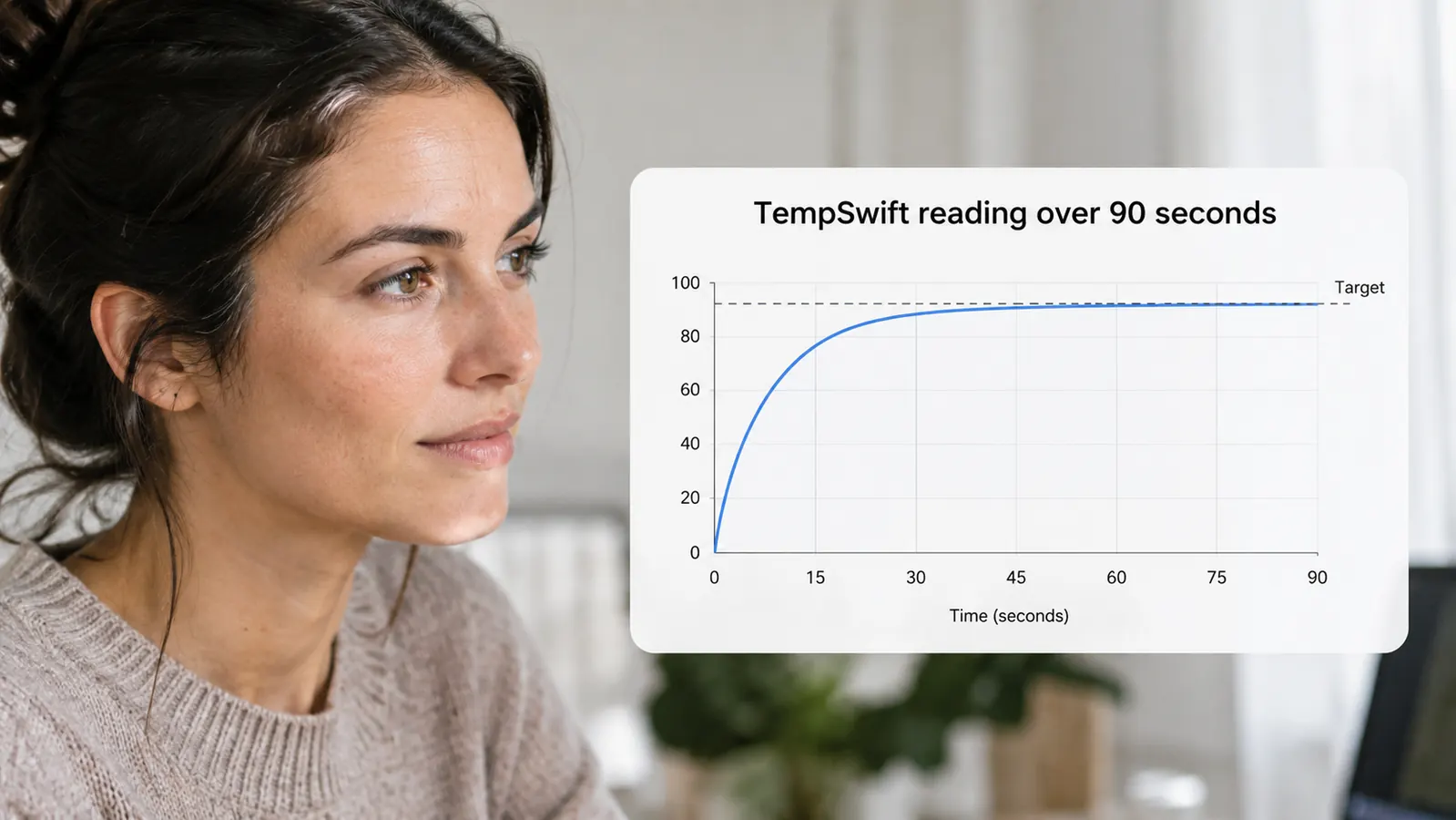
The product page says 1 second, and the box says 1 second, and the marketing materials say 1 second, and the truth is more complicated. The first reading that appears on the screen is usually within about a second and a half, but it is not always the final reading. On a thick cut of meat, the number will drift for another two or three seconds as the probe equilibrates. On a thin piece, like a chicken breast that is 1 inch thick, the first reading is essentially the final reading. The practical takeaway is that you should not yank the probe out the instant the first number appears. Give it two seconds. The number will settle, and the settled number is the one you want.
The other thing nobody tells you is that the thermometer is only as good as your technique. If you hit a pocket of fat, you will get a reading that is 10 to 15 degrees lower than the true temperature of the meat. If you hit bone, you will get a reading that is higher. I learned this the hard way on a pork shoulder in April. I took a reading that said 190, which is where I wanted it, and I pulled the pork off the smoker. When I started pulling it, the center was still slightly underdone. The probe had hit a pocket of fat. The thermometer was not wrong. I was wrong about where I put the probe. The fix is simple: take two readings in two different spots, and trust the lower one if you are worried about doneness.
The third thing is the auto-off. The TempSwift turns itself off after about 10 minutes of inactivity, which sounds like a feature until you are mid-recipe and you reach for the thermometer and it is dead. It is not actually dead. You just have to press the button to wake it up. The first few times this happened, I thought the battery had died. It had not. The battery, a single CR2032, has lasted the full six months, and I have not had to replace it yet. That is a small thing, but it is the kind of small thing that determines whether a gadget lives on the counter or in the drawer.
The thermometer is only as good as your technique. Hit a pocket of fat and you will get a reading 10 to 15 degrees low. The TempSwift was not wrong. I was wrong about where I put the probe.
The Weeknight Test: Chicken, Pork, and a Lot of Salmon
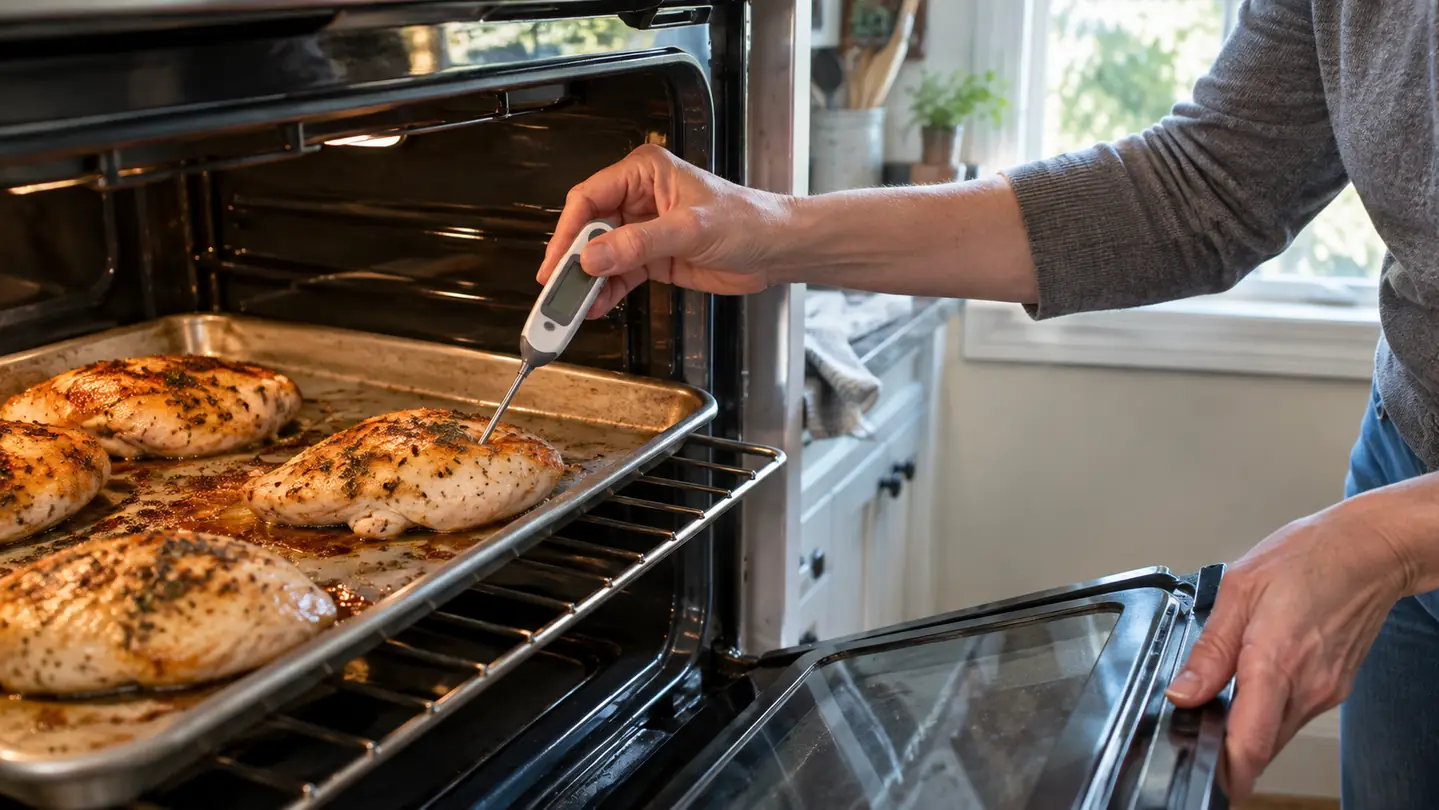
I cook a lot of chicken breast on weeknights because it is fast and my family likes it, and chicken breast is the food that benefits most from an instant-read thermometer. A chicken breast can go from done to dry in about 90 seconds, and I used to cut into every single one to check. The TempSwift has broken that habit. I now pull chicken at 160 and let it rest, and it carries over to 165 while it sits. The result is chicken that is actually moist, which sounds like a small victory but is the difference between a weeknight dinner that feels like a chore and one that feels like a meal.
Pork is where the TempSwift earns its keep. I grew up eating pork cooked to 170, which is a crime against pork. The USDA now says 145 is safe, and the TempSwift has made me brave enough to cook pork chops to 145 and pull them. The first time I did this, my wife Denise looked at the chop and asked if it was safe. I showed her the thermometer reading and explained the carryover. She ate it, and she has not asked since. That is the real value of a thermometer you trust: it changes what you are willing to cook, and it changes what your family is willing to eat.
Salmon is the surprise. I used to cook salmon by feel, which meant I cooked it until it flaked, which meant it was usually overcooked. The TempSwift reads salmon at about 125 for medium, and the difference between 125 and 135 is the difference between silky and chalky. My teenage son, who is not a fan of fish, ate a full portion of salmon cooked to 125 and said it was good. That has never happened before. I am not going to claim the thermometer made my son like fish. I am going to claim that properly cooked salmon is a different food than overcooked salmon, and the thermometer is the reason I finally cooked it properly.
The Sunday Roast Test: Where It Really Shines
Sunday dinners in my house are a production. I cook for eight to ten people, which means a large roast or a whole chicken or, on the big holidays, a turkey. The TempSwift is not a leave-in thermometer. It does not have a probe that stays in the meat while it cooks. It is an instant-read thermometer, and that distinction matters. For a Sunday roast, I use the TempSwift to check the temperature every 20 minutes or so, and I have learned that my oven runs about 15 degrees hot on the left side. I discovered this because the TempSwift gave me a reading of 150 on the left side of a roast while the right side read 140. I rotated the pan, and the roast finished evenly. My old thermometer would have given me the same information, but I would have had to hold the oven door open longer and wait for the reading. The TempSwift makes the check so fast that I actually do it, which is the whole point.
The one place the TempSwift is not the right tool is a long, slow cook where you want to monitor temperature continuously. For that, you want a leave-in probe thermometer with an alarm. I have one, and I use it for brisket and pulled pork. The TempSwift is the tool I use for everything else, and it is the tool I reach for when I am checking whether the leave-in probe is telling the truth. The two thermometers agree with each other, which is a nice sanity check.
The Drawer Space Question
I have a rule about kitchen gadgets: if it does not get used at least once a week, it does not get to live on the counter. The TempSwift has been on my counter since March, which means it has passed the rule for six months. It is not a large gadget. It is about the size of a pen, and it lives in a small cup next to the stove with my spatula and my tongs. It does not take up meaningful counter space, which is the highest compliment I can pay a kitchen tool in my kitchen.
The honest counterargument is that you do not need a 1-second thermometer. A 4-second thermometer will give you the same final reading, and it will cost less. I have owned both, and the difference is real but not life-changing. The 1-second read matters most when you are checking multiple pieces of meat, like a tray of chicken thighs or a rack of pork chops, because you can check each one quickly and get back to cooking. It also matters when you are cooking something thin, like a burger or a fish fillet, where the temperature is changing fast and a 4-second wait can mean the difference between medium and well done. If you cook those things regularly, the speed is worth it. If you mostly cook roasts and casseroles, a slower thermometer will serve you fine.
What I Liked
- Fast, consistent readings in about 1.5 seconds, with the final number settling within 3 seconds
- Thin probe tip slides into meat easily and reads accurately on thin cuts like chicken breast and salmon
- Large, easy-to-read display that works from a normal cooking distance
- Single CR2032 battery has lasted six months of daily use so far
- Small enough to live in a cup by the stove instead of taking up drawer space
- Simple two-button design that does not require reading a manual
Where It Falls Short
- Backlight is dim and only stays on a few seconds, which is annoying in a dark kitchen
- Probe is delicate and the tip can bend if you are careless with it
- Auto-off after 10 minutes means you have to wake it up mid-recipe, which is confusing at first
- Not a leave-in thermometer, so it cannot monitor a roast while you are away from the kitchen
- The 1-second claim is optimistic; the first number appears fast but the final reading takes another couple of seconds
Who This Is For
The TempPro TempSwift is for the home cook who is tired of cutting into meat to check if it is done. It is for the person who has overcooked one too many chicken breasts and is ready to spend a few dollars on a tool that fixes the problem. It is for the person who cooks on weeknights, when time is short and the margin for error is thin. It is for the person who wants to cook pork to 145 instead of 170 and needs a thermometer they trust to tell them when to pull it. It is for the person who has limited counter space and wants a gadget that is small enough to live in a cup by the stove.
Who Should Skip It
Skip the TempPro TempSwift if you already own a reliable instant-read thermometer that you use. The speed upgrade is real, but it is not worth buying a second thermometer if the first one works. Skip it if you mostly cook things that do not need precise temperature checks, like pasta, stir-fry, or sheet-pan vegetables. Skip it if you want a leave-in thermometer with an alarm, because this is not that. And skip it if you are the kind of person who loses small objects, because the TempSwift is small and it does not come with a case that attaches to anything. I keep mine in a cup by the stove, and that is the only reason I have not lost it.
The Thermometer That Earned Its Counter Space
After six months of weeknight chicken, Sunday roasts, and a lot of salmon, the TempPro TempSwift is still the first thermometer I reach for. It is fast, it is accurate enough for home cooking, and it has not ended up in the gadget graveyard drawer. If you are tired of guessing, this is the one to try.
Amazon Check Today's Price on Amazon →