
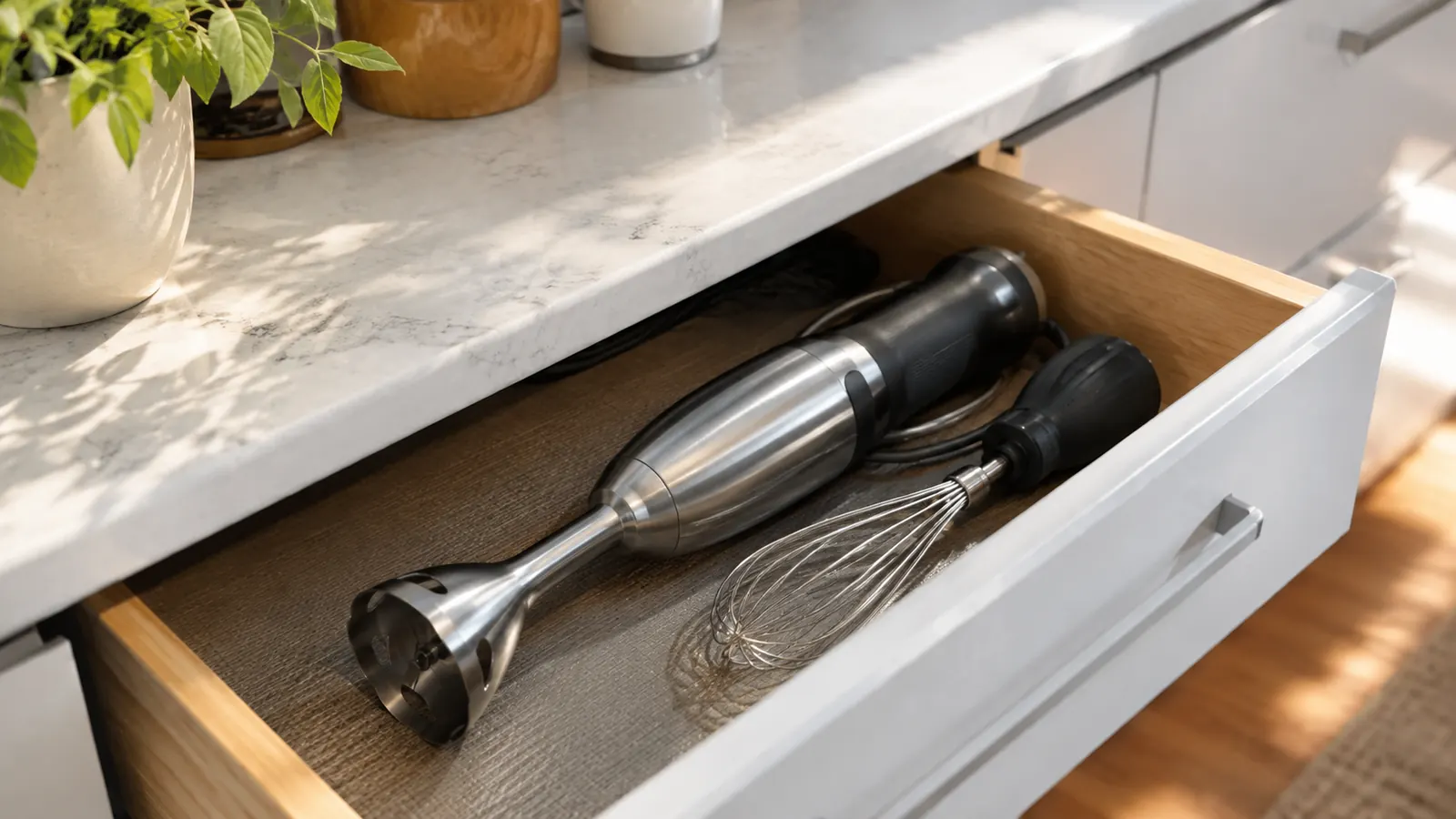
My kitchen in Hammond, Louisiana, has about four feet of usable counter space between the range and the sink. That is the whole work surface. I learned to cook in restaurant kitchens where you had a twelve foot prep table, so coming home to this took some adjusting. Every gadget I own has to earn its spot, because if it sits on the counter, something else I actually use has to go. That is the lens I use for everything now, including blenders.
I have been testing the KitchenAid Variable Speed Corded Hand Blender for the last month, running it through the dinners I actually cook on a Tuesday night. Tomato soup, lentil puree, salad dressing, a quick aioli. The short version is that it does what my old countertop blender does, but it lives in a drawer instead of on the counter. For anyone short on space, that is the whole argument. Here are ten reasons I keep reaching for it.
A Blender That Does Not Eat Your Counter
The KitchenAid Variable Speed Corded Hand Blender blends right in the pot and stores in a drawer. For a small kitchen, that is a fair trade.
Amazon Check Today's Price on Amazon →It Gives You Back a Permanent Chunk of Counter
My old blender sat between the toaster and the coffee maker, and it took up a spot about the size of a small cutting board. That spot was gone every day, even on days I never touched the blender. The KitchenAid hand blender lives in a drawer with the spatulas and the ladle. When I need it, it is out for two minutes, then back in the drawer. A kitchen with four feet of counter space notices that difference every single morning. The countertop blender is still in the pantry for the days I need it, but it is not hogging the counter anymore.
It Blends Hot Soup Right in the Pot
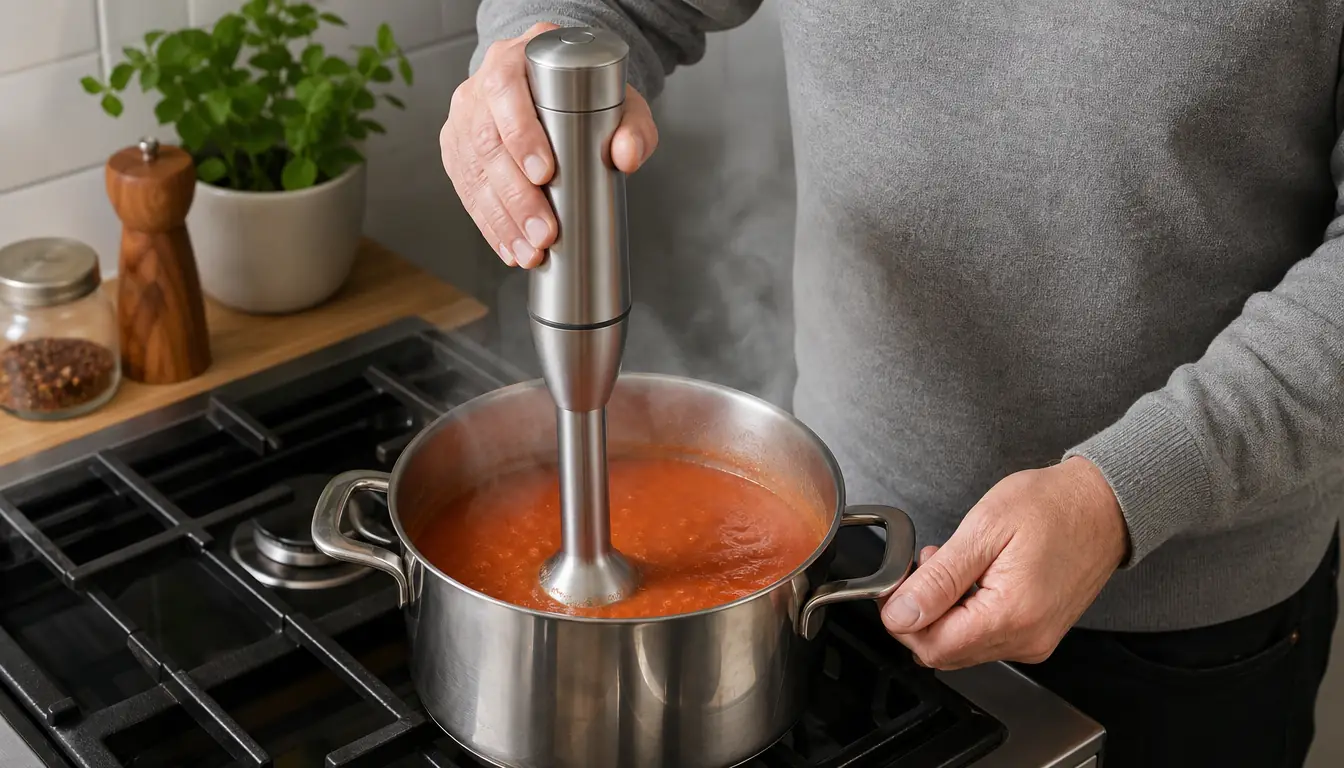
With a countertop blender, hot soup means transferring a boiling pot into the blender jar in batches, holding the lid with a towel so the steam does not pop it off, then washing the jar. With the hand blender, I leave the pot on the stove, put the wand in, and blend until smooth. No transfer, no extra bowl, no risk of a steam burn on my forearm. I made a batch of tomato basil soup on a Wednesday and it was smooth in about a minute of blending. One pot to wash instead of two, and my forearm came out fine.
One Pot Does the Whole Job
The same trick works for anything I want to puree. I make a lentil and carrot soup where I cook everything in one pot, then blend it right there. I make a roasted red pepper sauce for pasta the same way, peppers, garlic, olive oil, all in the pot I roasted them in. The hand blender turns the pot itself into the blender jar, which means one pot to wash instead of three. On a weeknight feeding three people, that cuts cleanup in half. On a Sunday for the family crowd, I puree sides right in the pot on the back burner.
Cleanup Takes Seconds, Not a Scrub Session
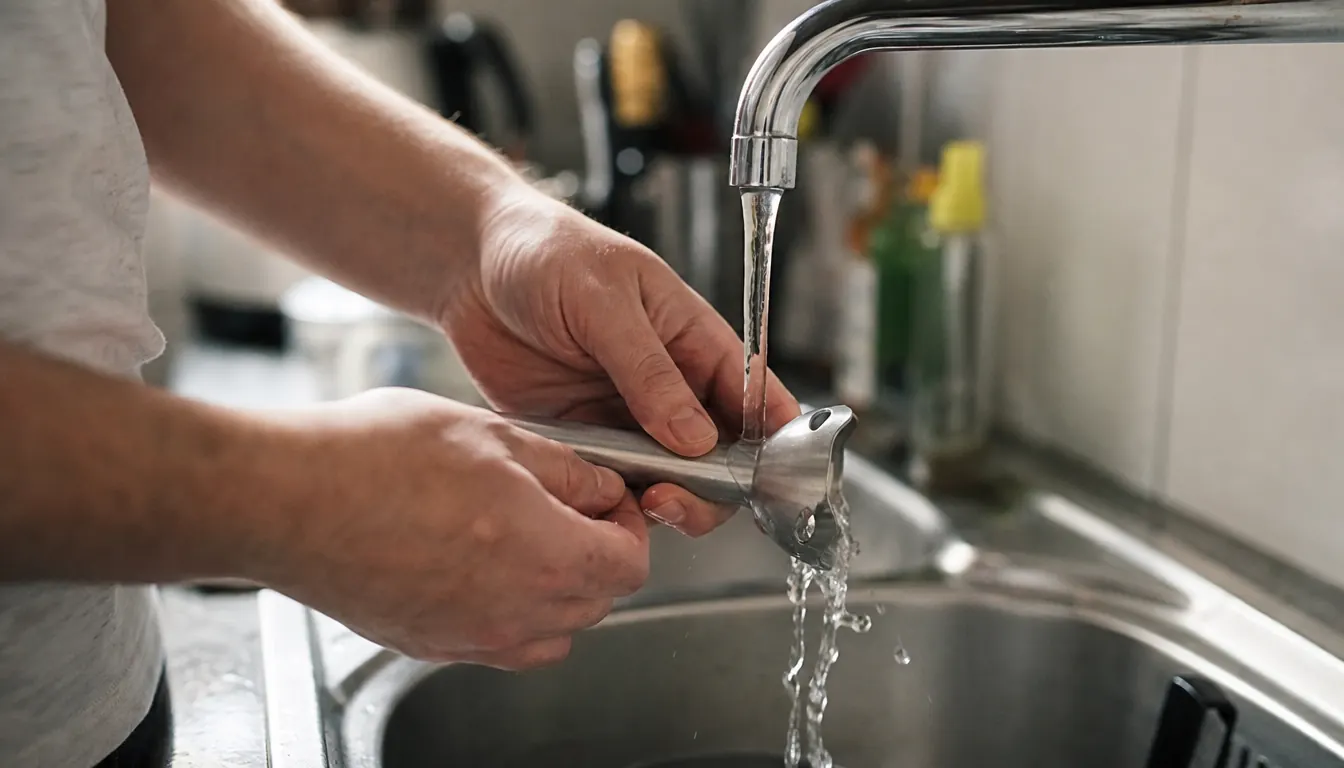
The countertop blender jar has a lid, a gasket, a blade assembly, and a bottom ring. That is four pieces to wash, and the gasket always holds onto something. The hand blender is one wand, and a rinse under hot water with a drop of soap clears it in about ten seconds. The shaft comes off the motor body, so I can put just the shaft in the dishwasher. The motor body never touches food, so it stays clean. When dinner cleanup is the difference between relaxing and doing dishes until nine, that counts.
It Is Quiet Enough for Early Mornings
I get up before the rest of the house for coffee, and on weekends I make a smoothie without waking my son. A countertop blender sounds like a small airplane taking off. The KitchenAid hand blender running in a tall cup is noticeably quieter, more like a loud whir than a roar. I made a frozen berry smoothie on a Saturday morning and my teenager slept right through it, which is the only proof I need. The cord is long enough that I can blend a quick sauce at the table if I need to.
It Reaches Deep Pots and Tall Containers
A countertop blender has a fixed jar height. If I am blending in a deep stockpot, the jar cannot get down to the bottom. The hand blender wand is long enough to reach the bottom of a big pot, and it works in whatever container I already have. I have blended a batch of butternut squash soup in a tall stockpot, and a single portion of dressing in a narrow glass. The wand goes where the blender jar cannot. That also saves me digging out the food mill I used to use for the same job, which lives at the back of a high cabinet.
It Handles Small Batches Without Waste
There are only three of us at home most nights, and a lot of recipes make more than we need. A countertop blender needs enough liquid to reach the blades, so a single serving of soup leaves me scraping the sides. The hand blender works with a cup and a half of liquid just fine. I make a small herb and oil dressing for one salad, and a single portion of smoothie, without making enough for an army. Less waste, and nothing sits in the fridge going bad. The blender does not dictate how much I cook. I cook what three people will eat, and the wand handles whatever is in the pot.
It Whips Cream and Beats Eggs Too
The attachment set includes a whisk, so the hand blender does double duty as a mixer. I whipped cream for a strawberry shortcake on a Sunday and it was stiff in about two minutes. I have beaten eggs for an omelet and whipped a small batch of cream for coffee. It is not a stand mixer, and I will not pretend it can handle a double batch of cookie dough, but for the little jobs it saves me dragging out the big mixer. The whisk clips in and out, so switching from blending to whipping takes about five seconds.
The Whole Thing Stores Flat in a Drawer
This is the reason I bought into the idea at all. The motor body and the shaft separate, and the whole thing fits in a drawer that is maybe ten inches deep. It takes up less room than a loaf pan. I keep the whisk attachment in the same drawer. Compared to the corner my countertop blender occupied, it is like the gadget is not there at all until I need it. I keep it in the drawer closest to the stove, which is the one I open constantly. A gadget you can grab without moving a step is a gadget you will actually use.
Variable Speed Means You Control the Texture
The dial on top lets me go from a gentle pulse to full speed, and that control matters more than I expected. For a chunky vegetable soup I pulse a few times and leave some texture. For a smooth sauce I run it full speed until it is silky. With the countertop blender it was basically one speed, run until done. Being able to feel the texture change as I blend means I do not over-blend things into baby food by accident. The dial also has a lock button, so I do not accidentally bump it on when it is sitting on the counter.
What I'd Skip
If you regularly blend big batches, frozen fruit into thick smoothies for a crowd, or anything with ice cubes by the pint, a hand blender will not replace a countertop blender for those jobs. The motor is strong for a handheld tool, but it is not a heavy duty blender. I still use my countertop blender when I make a big batch of frozen margaritas for the family on a Sunday. That is the honest tradeoff for a small kitchen. The KitchenAid hand blender earns its drawer space for everyday cooking, and the countertop blender comes out for the occasions.
I made tomato basil soup on a Wednesday and it was smooth in about a minute of blending. No transfer, no extra bowl, no steam burn.
The Drawer-Size Blender Worth Making Room For
The KitchenAid Variable Speed Corded Hand Blender blends hot soup right in the pot, cleans in seconds, and stores flat in a drawer. For a small kitchen, that is a real trade worth making.
Amazon Check Today's Price on Amazon →