

Smooth soup used to be the one thing I avoided at home. In the restaurant kitchen I had a real blender bolted to the counter and the space to use it. At home, in our 1990s ranch in Hammond, the counter is already holding the toaster, the coffee maker, and the knife block, and there is no room for another appliance. So soup meant either a chunky pot that nobody loved, or the old routine of pouring boiling hot liquid into a glass blender jar, holding the lid down with a towel, and praying nothing sprayed up past the gasket. Every home cook I know has a blender story, and most of them involve a hot soup lid that popped off and a kitchen that smelled like burned tomato for a week. I had my own version, and it is why the hand blender won me over.
Then I tried blending right in the pot with a KitchenAid hand blender, and soup went from a weekend project to a Tuesday night staple. No pouring, no splashing, no giant pitcher to wash, and no second machine taking up counter space. I use the same method I am about to walk you through every single week, and it works for vegetable soup, butternut squash, potato leek, even a quick tomato puree.
Blend hot soup in the pot, not in a glass jar
The KitchenAid variable speed hand blender does the whole job without adding a single appliance to your counter. It waits in a drawer until soup night, then purees the entire pot in under a minute and rinses clean in ten seconds.
Amazon Check Today's Price on Amazon →Step 1: Cook the vegetables until they are actually soft
The biggest mistake I see, and the reason most people conclude a hand blender leaves soup gritty, is blending vegetables that are still firm. A hand blender can puree a lot, but it will not fix an undercooked carrot or a half-raw potato. It will just turn them into fine wet sand, and no amount of extra blending fixes that. The tool is not the problem. The vegetable is.
So cook your base the way you normally would. Sweat the onions and garlic in a little oil until they soften, add your main vegetable, cover with stock, and simmer until a knife slides through the biggest piece with almost no resistance. For butternut squash, potatoes, or cauliflower, that is usually twenty to twenty-five minutes of gentle bubbling. For greens like spinach or kale it is more like five, and for a split pea or lentil soup the legumes need their own full cooking time before you even think about blending.
Do not rush this step. The soup will only ever be as smooth as the vegetables are soft, and properly soft vegetables blend in about half the time of firm ones, with less strain on the motor. If you are short on time, cut the vegetables smaller before they go in the pot, which shaves several minutes off the simmer. A pressure cooker also gets them tender fast, and then you blend in the same pot after the pressure releases. The reward for the extra ten minutes is a soup that blends smooth on the first pass, which means less work for you and a better result on the plate.
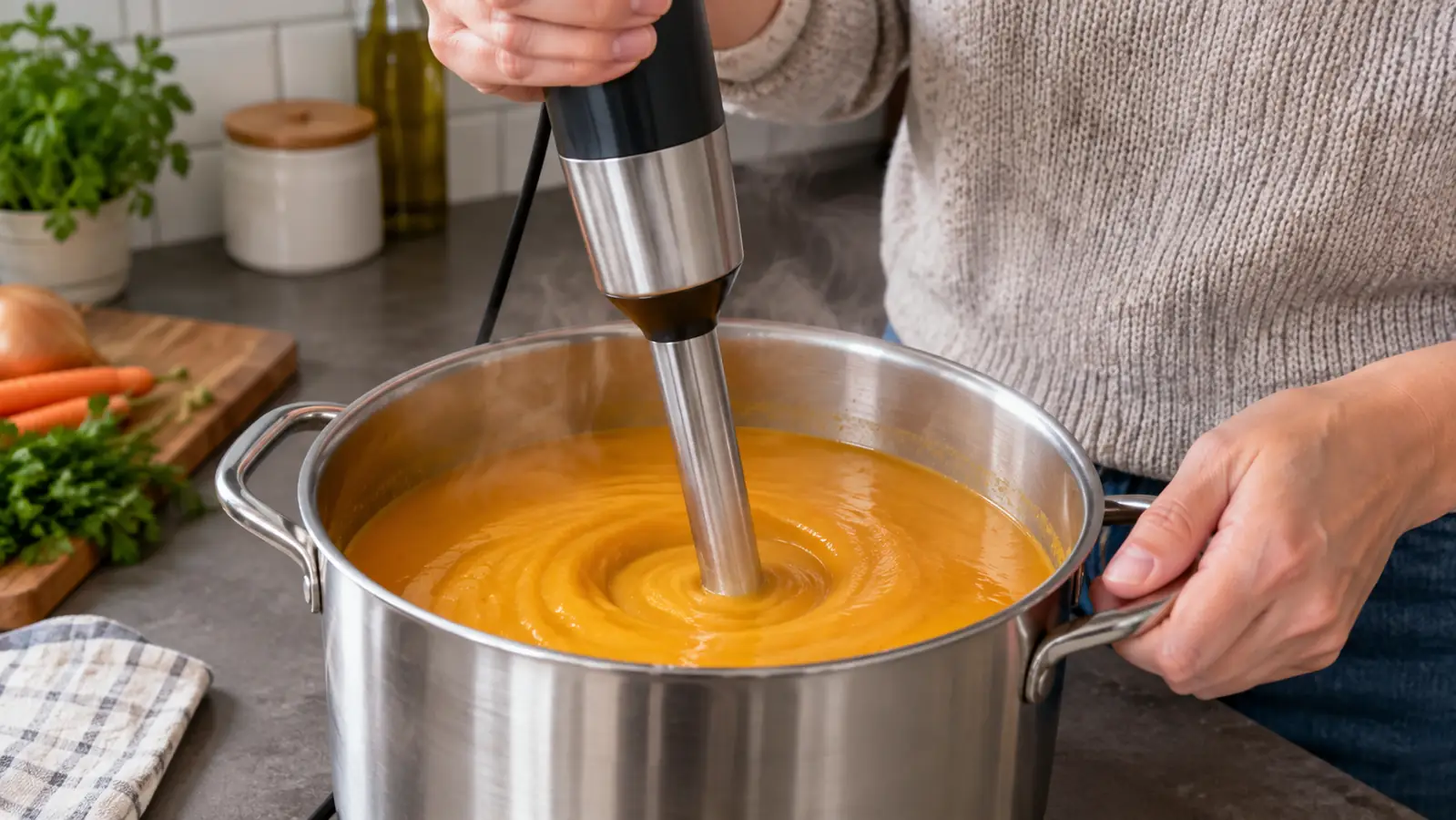
Step 2: Take the pot off the heat and let it settle
Before the blender comes anywhere near the pot, take the pot off the burner and give it two or three minutes to settle. You do not need it cool, but you do not want a rolling boil either. Boiling liquid is what turns a calm puree into a fountain, and a hand blender gives you no lid to hold down. A gentle steam that stops when you lift the wand is exactly the zone you want.
The one rule that saves the day: submerge the blade end fully before you switch it on. If the blades spin while the head is at the surface, you get a fine mist of hot soup across the stove, the counter, and anyone standing nearby. Blade fully under, then power on. That sequence is non-negotiable for me now, and it is the difference between smooth soup and a cleaning project.
I also tilt the pot slightly away from my body so the deep side is where the blender sits. More liquid over the blade means less chance of pulling it up near the surface, and it gives the blade more room to grab and pull the bigger pieces down into the stream. If the pot is very full, I ladle out a cup or two into a bowl first and stir it back in at the end, so nothing climbs over the rim. That little trick keeps the pot at a safe depth and saves me from wiping down the stovetop a second time.
Step 3: Start slow, then work the up and down sweep
This is where the variable speed dial earns its keep, and it is the reason I reach for this model over a single speed wand. Start on the lowest setting and keep the blender moving in a slow up and down motion, like you are stirring from the bottom of the pot. You will feel the blade catch the larger pieces and draw them down into the stream. Low speed also means less chance of splashing while the soup is still thick. You can always go faster later, but you cannot un-splash a hot pot, so the slow start is worth it.
Once the soup starts to move on its own, dial the speed up gradually. I usually land around medium for a smooth puree. The up and down motion matters more than the speed: if you hold the blender still in one spot, you puree a hole in the middle and leave the edges chunky, which is exactly the gritty result people blame on the tool. The motion does the work, not the power.
For a truly silky texture, spend thirty seconds doing a full sweep of the pot. Down to the bottom, across to the far side, back up, repeat, covering the whole surface instead of just the center. Most soups are fully smooth in under a minute. If you want a little texture, blend only half the pot and stir the chunky half back in. If you want it completely smooth and there are still tiny bits, give the pot another ten second pass and they will disappear.
Step 4: Adjust the texture and season after blending
Taste the soup before you add anything else. If it is thicker than you like, stir in a little more stock or water and blend for a few seconds more. If you want it thinner, this is the time to do it. Once you add cream or butter, you have mostly locked in the texture, and you will want to taste it again anyway, so get the base right first. A good trick if you are unsure: blend, then dip a spoon in and let it drip. A smooth puree drips in a slow ribbon. A soup that needs more blending drips in thin drops.
Season after blending, not before. Blending changes how salt reads on the tongue, and broth that tasted perfectly seasoned can taste flat once it is pureed and the flavors have recombined. Add a pinch, blend briefly, taste, repeat. The same goes for pepper and for a squeeze of lemon, which brightens a puree in a way that is hard to predict before blending.
If you are finishing a cream soup, this is also the moment to blend in a pat of butter or a splash of cream at low speed. It emulsifies into the soup and gives it that glossy mouthfeel you get from a restaurant puree. Just keep the speed low so you do not whip air into it and turn it foamy. A few seconds is plenty; the butter does not need to be blended hard, it just needs to be incorporated.
Step 5: Clean up in the same pot
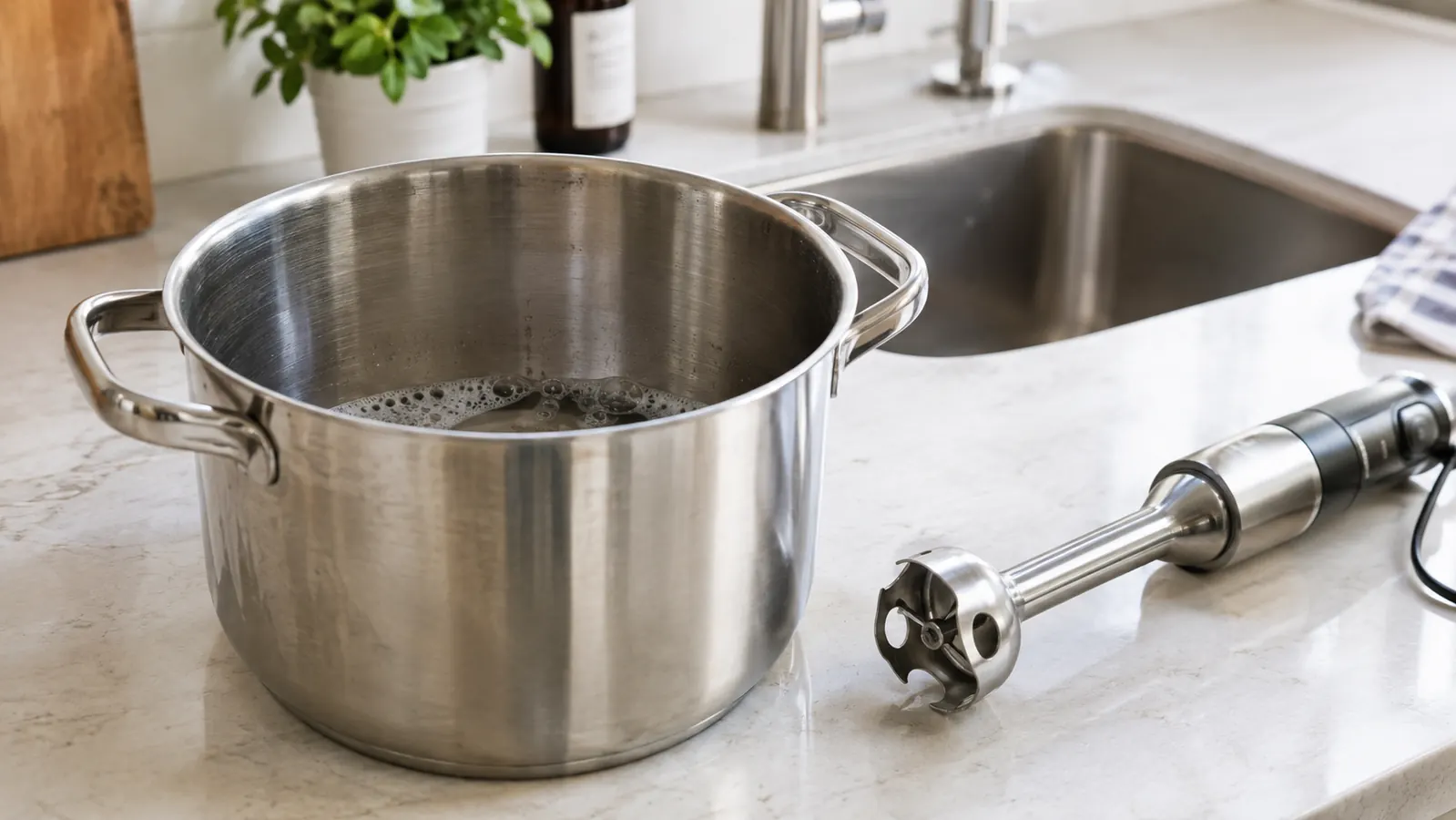
Here is the part that sold me on the whole idea. When the soup is served, add about two inches of warm soapy water to the empty pot and run the blender on low for ten seconds. The blade cleans itself, and the bottom of the pot gets a quick rinse as the water spins. Then run the shaft under the tap for a second and you are done. The whole cleanup takes less time than finding the blender lid used to. The soapy water trick works for any hand blender, but it is especially nice with this one because the shaft detaches and nothing with a motor ever goes near the water.
The detachable shaft makes this even easier. On the KitchenAid model, the blending shaft pops off the motor housing, so you can wash the shaft in the sink without ever getting the motor wet, and the motor end just gets a wipe with a damp cloth. Nothing needs to go in the dishwasher unless you want it to, and the shaft is easy enough to hand wash that I never bother.
Total cleanup is the pot, the shaft, and one spoon. Compare that to the old routine of the blender pitcher, the lid, the gasket, the counter spray, and a towel soaked with whatever escaped, and you can see why soup became a Tuesday night thing instead of a Sunday project. The dishwasher used to run twice on soup night in this house. Now it runs once, like any other night.
What Else Helps
A few things I learned the hard way. Let the soup cool for a couple of minutes before blending so steam does not push up past the blade. Blend in batches if the pot is very full, because the liquid needs room to move and a full pot can climb. Fish out a bay leaf or bouquet garni before you blend, because herbs puree into tough little fibers that no amount of blending will fix. Keep the motor housing dry, even though the shaft can go in water, because the vents on top are not sealed. And if a soup comes out thinner than you like, a peeled potato simmered in it for ten minutes will thicken it as it cooks and give the blender something to work with.
One thing I stopped doing: blending at the highest speed from the start. High speed right away churns air into the soup, which makes it look frothy and taste a little flat. The gradual ramp up from low keeps the puree dense and smooth, and it is easier on the motor, too. If your hand blender feels weak, this is even more important, because starting slow lets the blades get a grip before you ask for power.
One more habit I have picked up: if I am making soup for a crowd on Sunday, I blend the whole pot the same way, then keep it warm on the lowest burner setting with a lid on. The hand blender gets one more quick pass right before I serve, which brings it back to a glossy puree after it has sat and separated a little. For a big batch, that final pass is the difference between a soup that looks tired and one that looks like it came from a restaurant.
Total cleanup is the pot, the shaft, and one spoon. The dishwasher used to run twice on soup night in this house. Now it runs once, like any other night.
Make soup a Tuesday night thing again
The KitchenAid hand blender lives in a drawer between uses, takes up zero counter space, and turns a pot of simmered vegetables into smooth soup in under a minute. If you have been skipping soup because of the blender cleanup, this is the fix, and it has been mine for the past year of Tuesday nights.
Amazon Check Today's Price on Amazon →