

I have a confession to make. For years I treated the hand blender the way I treat the drawer of takeout menus: I knew it was there, I told myself I would use it someday, and then I reached for the same three tools I always reach for. The KitchenAid Variable Speed Corded Hand Blender sat in the back of my cabinet for close to a month before I gave it a real chance. That is on me, not on the blender. When I finally pulled it out on a Tuesday night in early November to make butternut squash soup, I learned two things in a hurry. The first is that I had been making soup the hard way for twenty years. The second is that the tool has limits, and pretending otherwise does nobody any favors.
This is not a review written after one perfect Sunday dinner. This is what happens when a former line cook with limited counter space uses one tool for months on real weeknights, for a wife and a teenage son who do not care about my nostalgia for the restaurant kitchen. I cooked for three most nights and for a bigger crowd on Sundays. I made soup, I made vinaigrette, I made the kind of smooth purees that used to cost me a pile of dishes. And I found the spots where the KitchenAid earns its drawer space, and the spots where it does not. That distinction matters, because a gadget that only works when everything goes perfectly is not a gadget worth owning.
The Quick Verdict
A genuinely useful tool for soups, sauces and small-batch purees that earns its spot in a small kitchen, as long as you know exactly what it will not do.
Amazon Check Today's Price →The hand blender that finally earned its cabinet space
I spent months testing the KitchenAid Variable Speed Corded Hand Blender on weeknight dinners for a family of three. If you are tired of hauling out the countertop blender for a single pot of soup, here is the honest version of what this tool will and will not do for you.
Amazon Check Today's Price on Amazon →How I've Used It
The honest version of how I tested this thing is that I did not test it at all for the first three weeks. It sat in the box. I was busy, I was skeptical, and I already owned a perfectly good countertop blender. Then the weeknight routine hit a wall. My wife Denise asked for butternut squash soup on a Tuesday when I had exactly forty minutes between getting home from the warehouse and getting dinner on the table. Roasting the squash, simmering it with stock and onion, then transferring it in batches to the countertop blender, that was a forty-five minute project before I even started cleaning up. I decided to try the hand blender instead.
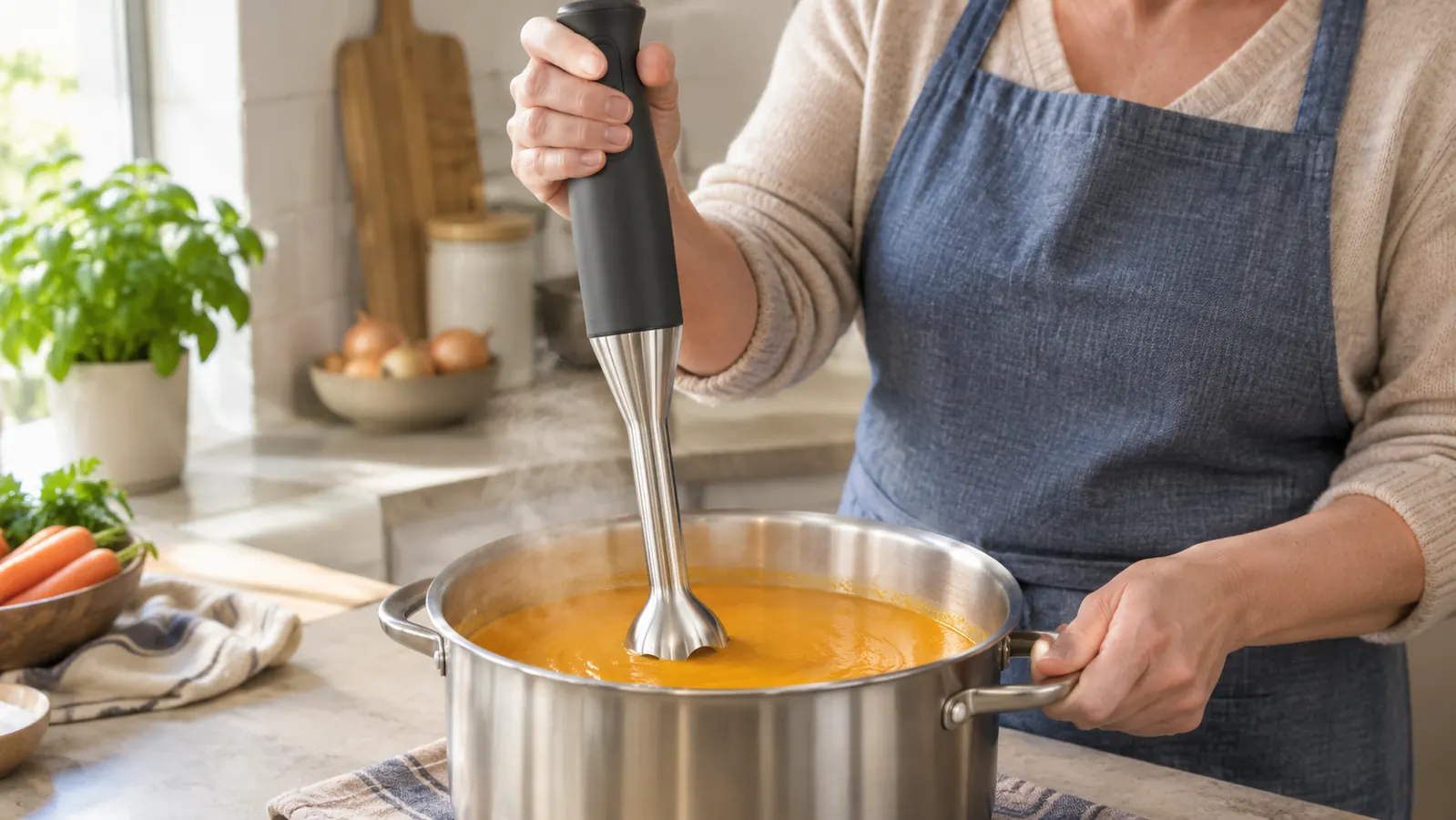
I blended that soup right in the pot, in about ninety seconds, and the cleanup was the wand under running water. No pouring hot soup into a pitcher in two batches. No waiting for it to cool so the lid would not pop. No scraping the sides with a spatula. That was the moment I started paying attention. Over the next few months I used it for red pepper soup, tomato soup, a cauliflower puree for Sunday dinner, applesauce from a bag of apples that were going soft, and a vinaigrette that came together in the measuring cup in under a minute. I kept a mental list of what worked and what did not, the way I used to keep a prep list on the line.
The variable speed dial is the feature I did not expect to care about. On the low end, the blade turns slow enough that I can pulse a few chunks of roasted garlic into a paste without turning the whole pot into foam. On the high end, it purees a pot of soup smooth enough that nobody at the table guesses it started as chunks. The cord is long enough to reach the outlets in my kitchen without an extension, which matters more than it sounds like it should in a 1990s ranch house where the outlets are exactly where the builder put them back in 1994.
The first time I used it, I failed. I dropped the wand in, pulled the trigger on high, and let the blade break the surface. A fine mist of hot soup hit the stovetop, the cabinet doors, and me. My wife still brings it up. The lesson is that you keep the blade below the surface, move it in a slow circle, and tilt the pot so the liquid flows back toward the blade. Once that motion is in your hands it becomes automatic, but it is a real skill and it takes a few pots of soup to learn.
What Nobody Tells You Before You Buy
Here is the part most reviews skip. The KitchenAid hand blender is not a replacement for your countertop blender, and anyone who tells you it is has not tried to make a smoothie in it. A smoothie with frozen fruit and ice is exactly the kind of job this tool struggles with. It will chop the fruit, but it will not crush ice the way a heavy countertop blender will, and it will leave you hunting for stray chunks at the bottom of the jar. I learned this the hard way on a Saturday morning in February when I tried to shortcut the smoothie routine and ended up fixing the texture with the big blender anyway.
The other thing nobody tells you is that the wand has a sweet spot, and I already described what happens when you miss it. You cannot just drop it in the pot and hold the trigger. You keep the blade submerged, you work in a slow circle, and you tilt the pot. The first time I let the blade break the surface, I decorated half the kitchen with tomato soup. That is not a knock on the tool. It is a warning that this is a skill with a small learning curve, and the reviews that call it foolproof are doing you a disservice.
The attachments matter more than the marketing lets on, and less than the box suggests. The whisk that comes in the box works for whipped cream and egg whites, but it is not a stand mixer replacement. I tried to whip a small batch of cream for a dessert on a Sunday and it took longer than I expected, with a couple of stops to let the motor rest. The chopper attachment is genuinely useful for small amounts of onion or herbs, but it is not going to dice a whole onion the way your knife will. I mention these because the box lists them as features, and a feature you never use is just more stuff in the drawer.
One more thing they do not print on the box: the motor is loud. Not alarming, but loud enough that my teenage son knows soup night is happening from the other end of the house. On the high speeds it is noticeably louder than the low end. That does not bother me, but if you cook while the family watches TV in the next room, plan for the noise. Small honest details like this are exactly what I wish someone had told me before I bought.
Once that motion is in your hands it becomes automatic, but it is a real skill and it takes a few pots of soup to learn.
Where It Shines in a Real Kitchen
If I had to pick the one job this tool does better than anything else in my kitchen, it is soup. Pureed soup, specifically. Roasted tomato, butternut squash, broccoli cheddar, black bean, the list goes on. The reason is simple: you blend it in the pot you cooked it in. There is no transfer, no second vessel to wash, no risk of a hot liquid splash when you take the lid off a blender. For a cook who hates cleanup, that is the whole argument in one sentence. On a cold night in January I made a pot of black bean soup for nine people and pureed it in the pot in under three minutes, then served it from the same pot.
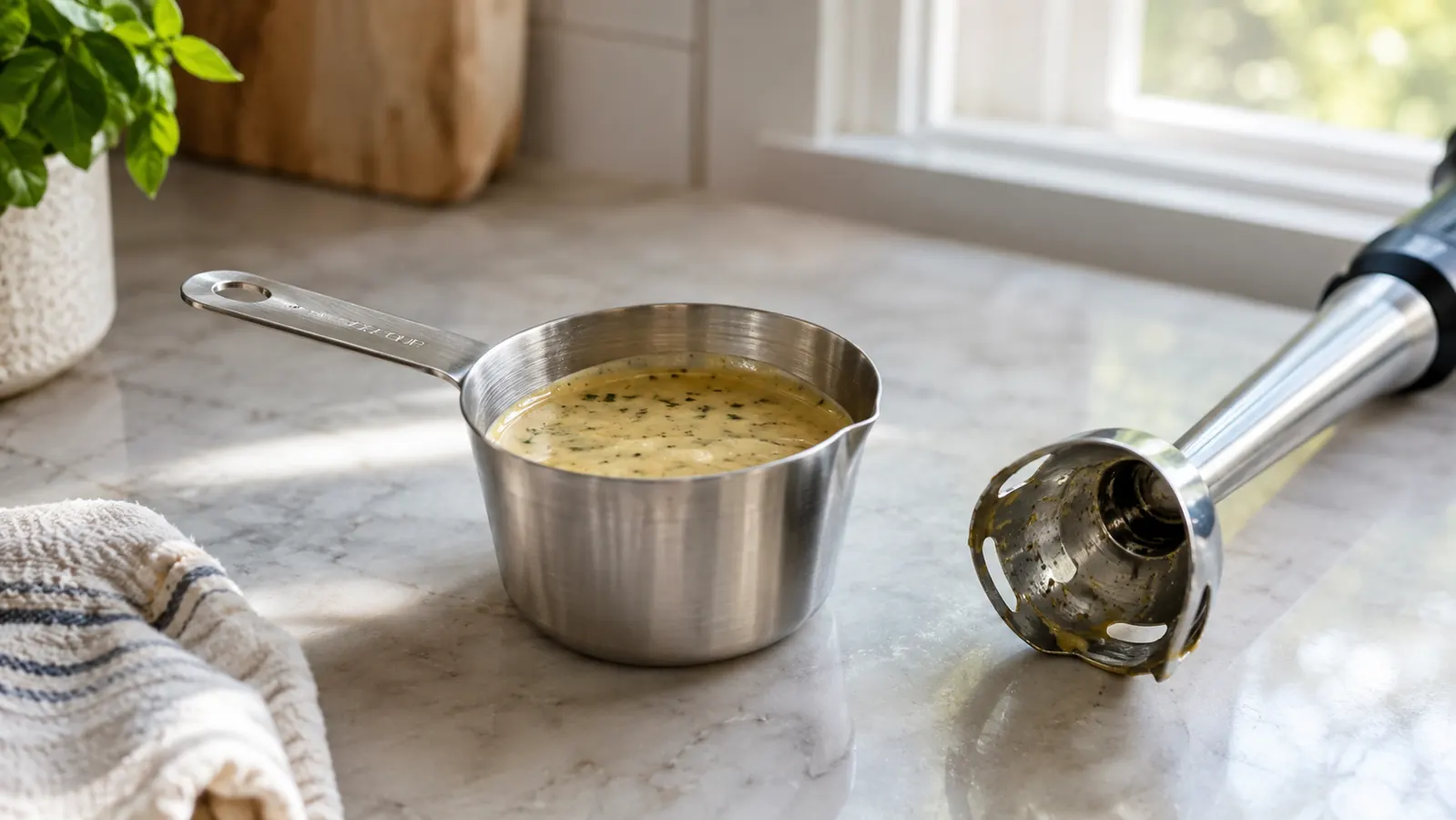
It also shines at small-batch jobs where a full-size blender is overkill. A vinaigrette for the salad, a quick puree of roasted peppers to spread on sandwiches, a sauce for the fish that is already in the pan. My standard vinaigrette is three parts oil to one part vinegar with a spoon of mustard, and the hand blender emulsifies it in the measuring cup in about thirty seconds, something a whisk takes five minutes to do and still leaves streaky. On those nights, the countertop blender stays in the cabinet and the hand blender does the job in a minute. For a kitchen with limited counter space, that is the difference between a tool that gets used and a tool that gets admired.
On Sunday dinners, when the crowd gets bigger, I use it for the sides more than the main. Cauliflower mash, sweet potato puree, a big pot of potato soup. The motor handled all of it without straining, and the blade stayed sharp through months of use. I have not noticed any dulling, which is more than I can say for the cheap immersion blender I owned in my twenties that stripped its own gears blending frozen berries. That thing is a cautionary tale. This KitchenAid has held up through a full season of soup weather and a spring of sauces without missing a beat, and it is still the first tool I reach for when the pot comes off the stove.
Where It Falls Short
I promised honest, so here is the honest part. The biggest limitation is ice and frozen fruit. If your weeknight routine depends on smoothies, this is not the tool for you. It will make a passable smoothie from soft fruit and yogurt, but a frozen-strawberry-and-ice smoothie will come out uneven, with chunks you have to pick out or a texture that is more slushy than creamy. I tried it three separate times to be fair, on three different Saturday mornings, and all three times I reached for the countertop blender afterward to fix the texture. If smoothies are your main blender job, buy a smoothie blender and skip this one.
The cord is my second complaint. A corded hand blender has never bothered me because I have outlets near my stove, but if your kitchen layout puts your only outlet on the other side of the room, you will be stretching the cord across the counter every time you use it. The cord is long enough, but it is still a cord, and it lives in a drawer with the rest of the attachments. That is a small thing, but small things are what decide whether a gadget stays in the rotation. In my kitchen it stays. In a kitchen with worse outlet placement, I would understand the argument for a cordless model despite the battery tradeoff.
The third thing is the one I keep coming back to, and it is the noise. I already mentioned it, but it deserves its own space because it is the complaint that will surprise you most. The motor is loud enough to hear from the next room, and on the high speeds it is a definite presence in the kitchen. It does not bother me, but it is the kind of detail that the glossy reviews skip entirely. The tradeoff is real: you trade the noise for the convenience of blending in the pot, and for my cooking that is a trade I make gladly every week.
What I Compared It Against
I did not buy this blender in a vacuum. I compared it against the countertop blender I already owned, which is a perfectly good mid-size machine that lives on my one usable counter. The comparison came down to a simple question: how often did I actually want to haul the big blender out? The answer, for my cooking, was not often enough. The hand blender does not replace it, but it covers the jobs I reach for a blender for most often, which are soup and sauces. On a typical week, the countertop blender comes out once, if that. The hand blender comes out three or four times.
I also thought hard about a cordless hand blender, because the lack of a cord is appealing and the counter space argument is real. In the end the corded version won for one reason: power. A cordless model runs out of battery and loses speed as the charge drops, and the last thing I want mid-soup is a blender that slows down because I forgot to charge it. The corded KitchenAid delivers the same speed every time, from the first use to the hundredth. For the way I cook, consistency beats convenience.
And I compared it, honestly, to the tool it was replacing: my arm and a potato masher. For chunkier soups, a masher gets you most of the way there and it is nearly free. But for smooth purees, for a vinaigrette that actually emulsifies, for a sauce that comes together in the pot instead of in a second bowl, there is no comparison. The hand blender does in ninety seconds what my arm does in fifteen minutes, and it does it better. That is the arithmetic that decided the drawer space.
What I Liked
- Blends soup right in the pot, so the cleanup is a wand under running water instead of a blender pitcher
- Variable speed dial covers everything from a gentle pulse for garlic paste to a full puree
- Small-batch friendly: the chopper bowl doubles as a blending cup for single servings
- Held up through months of weekly use with no dulling and no loss of speed
- Long cord reaches the outlets in a 1990s ranch kitchen without an extension
Where It Falls Short
- Will not crush ice or frozen fruit; smoothies come out uneven and need the countertop blender anyway
- There is a real learning curve to keep the blade submerged and avoid splatter
- The motor is loud enough to hear from the next room on high speed
- The whisk attachment is not a stand mixer replacement; slow on egg whites and cream
Who This Is For
This is for the home cook who makes soup, sauces, and purees a few times a week and is tired of washing a blender pitcher every time. It is for the cook in a small kitchen who measures a gadget by whether it earns counter or drawer space. It is for the person who wants one tool that covers small-batch jobs without dragging out the big machine. If that sounds like you, this blender will likely earn its place in your rotation the way it earned mine, and the learning curve will feel like a fair trade for the cleanup you save.
It is also for the cook who already owns a good knife and a good pot and just wants to close the gap on texture. This is not a gadget that makes you a better cook. It is a gadget that removes a chore, the chore of transferring hot liquid between vessels and washing a second one. For weeknight dinners when the clock is the real opponent, that chore is the difference between a homemade soup and a can. That is not hype. That is the arithmetic of a Tuesday night.
Who Should Skip It
If smoothies are the reason you own a blender, skip this and keep your countertop machine. If you make nut milks, frozen drinks, or anything that depends on crushing ice, the hand blender will frustrate you. It is not a replacement for a heavy-duty blender, and anyone who tells you otherwise has not tried to blend a handful of frozen strawberries into a drinkable smoothie. I know, because I tried, and I reached for the big blender to fix it.
Skip it too if you already reach for your countertop blender without complaint. If the cleanup never bothered you, there is no problem here for this tool to solve. And if you want a cordless tool because you cook in a space with no outlet near your work area, the corded version will be a daily annoyance. Buy the tool that matches your actual kitchen, not the one that looks best on the page. That advice applies to every gadget I have ever owned, and this one is no exception.
The honest verdict after months of weeknight soup
The KitchenAid Variable Speed Corded Hand Blender is not perfect, and I have told you exactly where it falls short. But for soups, sauces, and small-batch purees in a kitchen with limited counter space, it has earned a permanent spot in my rotation. If that sounds like your kitchen, today's price is worth checking.
Amazon Check Today's Price on Amazon →